



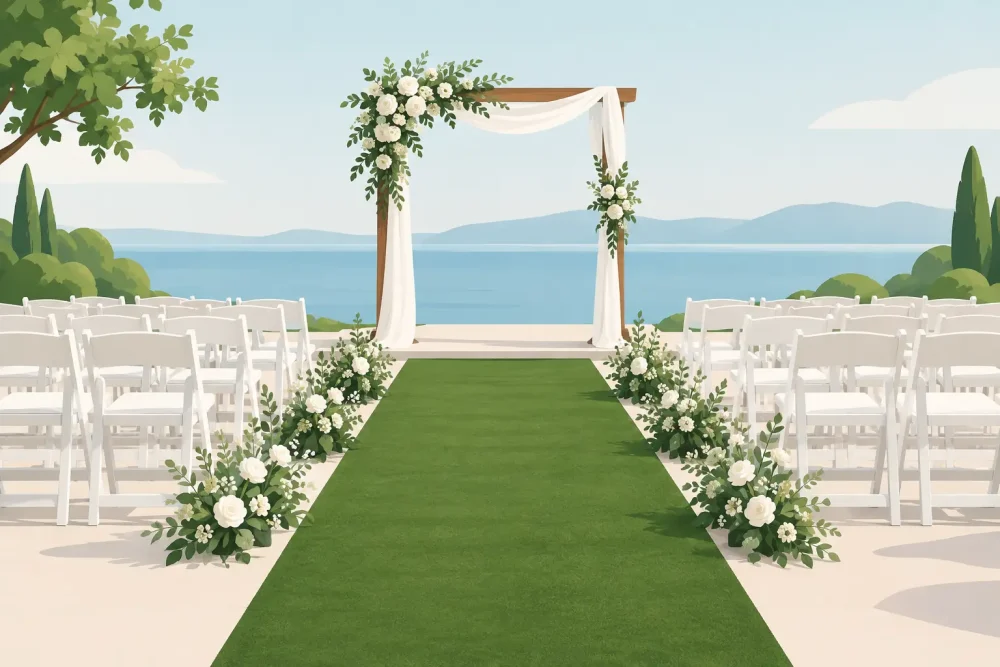
A turf grass runner for wedding ceremonies does more than cover the ground. It creates a defined aisle, gives heels a more dependable surface, and brings a finished look to lawns, patios, courtyards, rooftops, and tented spaces. When guests arrive, the runner immediately signals where the moment begins.
Artificial turf is especially effective for couples who want an outdoor setting to feel intentional without competing with the landscape. The rich green texture reads beautifully in photos, works across classic and modern palettes, and can make a sparse ceremony site feel ready for a celebration.
Why Choose a Turf Grass Runner for a Wedding?
A natural lawn can be charming, but it is not always event-ready. Grass may be patchy, damp, uneven, or muddy after rain. A quality turf runner creates visual consistency from the first step of the aisle to the ceremony backdrop, while helping protect formal shoes and wedding attire from direct contact with the ground.
It also gives planners more control over the layout. Use it to frame a straight aisle between chair rows, define a curved path through a garden, or lead guests from a reception entrance toward the dance floor. At a venue with concrete, gravel, or wood decking, turf can soften the setting and introduce a fresh outdoor feel without major installation work.
The trade-off is that turf is a statement material. It has more texture and color than a white or ivory aisle runner, so it should support the overall design rather than become an afterthought. For a formal black-tie wedding, pair it with clean seating, restrained florals, and polished accents. For a coastal, garden, ranch, or bohemian celebration, it can be the grounding element that makes layered decor feel cohesive.
Select the Right Runner Size Before You Order
The right dimensions depend on the aisle layout, the ceremony party, and how much surrounding floor you want to show. A narrower runner creates a crisp, traditional path. A wider runner feels more generous and is often the better choice for a couple walking together, a wedding party in larger attire, or a ceremony designed for sweeping photography.
Start by measuring the full walkable distance, not just the visible ceremony aisle. Consider whether the runner should begin at the first chair row, extend through an entrance gate, or continue behind the altar for a unified ceremony platform. Add a little extra length when the end will be tucked beneath a backdrop, stage, or floral installation.
For a standard straight aisle, confirm three measurements before purchasing: width, finished length, and clearance around chairs. Leave enough room for seated guests to enter and exit without stepping on the edge of the runner. If the layout includes turns, circles, or an irregular space, a custom-cut configuration may provide a cleaner result than trying to overlap several standard pieces.
Think Through the Guest Experience
A beautiful aisle still needs to work during a live event. Consider the train of the wedding dress, the number of attendants, and whether elderly guests or young children will walk on the surface. Turf with a low, even pile offers a stable appearance and helps prevent the awkward sinking that can happen on wet grass.
For outdoor ceremonies, also think about shoes. Stilettos, loafers, wedges, and bare feet all interact with the surface differently. A properly secured turf runner offers more confidence than a loose rug on uneven ground, but no flooring product can correct a severely sloped or damaged site. If the ground is uneven, address the venue surface first or use a supporting subfloor solution.
Style the Turf Without Hiding Its Impact
The appeal of a turf aisle is its texture. Let it show. A few thoughtful design elements can elevate the runner without covering the feature that makes it special.
White floral arrangements and soft ivory petals create a crisp contrast against green turf. Terracotta vessels, dried palms, and warm wood seating bring out a more organic, sunlit look. For a polished evening ceremony, use clear acrylic chairs, candlelight in secure vessels, and sculptural white florals to make the green aisle feel tailored rather than casual.
The runner can also connect different zones of the wedding. Use the same turf texture at the welcome sign, cocktail hour entrance, photo moment, or bar frontage. Repeating one material in small, strategic ways makes a larger venue feel designed as a whole.
If you are using bold wedding colors, green turf is often easier to work with than a brightly colored carpet because it behaves like a natural neutral. Still, avoid adding too many competing shades directly on the aisle. Choose one focal treatment, such as petals, floral clusters, or lanterns, and allow the runner to provide the visual foundation.
Plan for Weather, Setup, and Safety
Outdoor event flooring should be installed with the conditions in mind. Turf is a practical choice for many open-air settings, but it needs a clean, dry, reasonably level surface for its best appearance. Sweep away rocks, sticks, and debris before unrolling the runner. On hard surfaces, clean away dust and moisture so securing materials can make reliable contact.
Wind is a factor that can be overlooked until setup day. Even a heavy runner can lift at corners if it is not secured. Use event-appropriate installation tape or approved fastening methods along the edges and at the ends, following the venue’s rules for lawns, patios, and finished flooring. Never rely on decor pieces alone to hold a runner in place.
Moisture changes the plan, too. Artificial turf will not become mud, but standing water underneath can affect stability and make edges slippery. If rain is likely, inspect the site for drainage, keep the runner rolled until installation time when possible, and have towels or a squeegee available for hard-surface setups.
For tented weddings, turf can define a ceremony aisle or lounge area beautifully, but account for tent stakes, cable runs, and chair placement before finalizing dimensions. The goal is a clean path with no raised seams, exposed tape, or tripping points. Good installation is nearly invisible, which is exactly what makes it feel high-end.
When Custom Turf Is Worth Considering
Standard turf runners are an excellent fit for straightforward aisles and fast-moving event plans. Custom options become valuable when the venue calls for an unusual width, an extra-long walk, a curved layout, or a distinct shape around a ceremony-in-the-round design.
Custom sizing can also reduce waste and eliminate the visual distraction of overlapping panels. For a wedding with branded welcome details, a monogram, graphic motif, or a coordinated reception entrance, a custom flooring approach allows the same visual language to travel through the entire event.
This is where lead time matters. A ready-to-order runner may be ideal for a simple layout or a short planning window. A custom project deserves earlier measurement, design review, production time, and a delivery plan that leaves room for any venue-specific coordination. Event Rugs can help translate those practical details into a runner plan that fits both the room and the wedding vision.
A Better Way to Finalize Your Aisle Plan
Before you commit, stand at the ceremony entrance and look toward the altar. Notice what the couple, guests, and photographer will see first. The right turf runner should direct the eye forward, complement the surroundings, and make every walk down the aisle feel deliberate.
Measure carefully, secure it properly, and give the green texture room to do its job. A well-planned turf aisle is not just a floor covering. It is the first path into one of the most photographed moments of the day.