



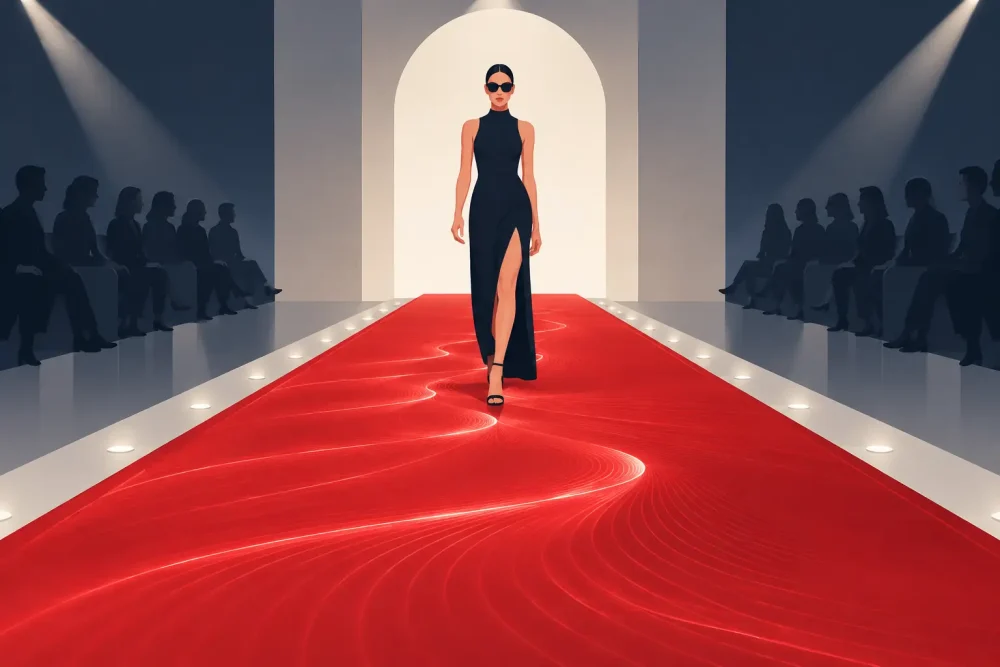
A fashion show runway carpet does more than cover a floor. It frames the collection, directs every camera angle, creates a defined path for models, and gives guests an immediate cue that they have arrived somewhere intentional. Whether the presentation is a small designer showcase, a retail launch, or a full-scale production, the runway surface needs to look exceptional under lights while standing up to rehearsals, heels, equipment, and fast venue turnarounds.
The strongest runway decisions begin before anyone selects a color. Start with the show’s point of view, the venue conditions, the guest journey, and the practical demands of production. A dramatic carpet can make a major visual statement, but it also needs to lie flat, fit the layout, and arrive on schedule.
Why a Fashion Show Runway Carpet Sets the Tone
The runway is the visual spine of a fashion presentation. It is where the audience’s eye lands first and where the collection is seen most consistently. A bare floor can work for an industrial concept or a venue with a striking existing surface, but it can also introduce glare, visual noise, uneven color, or a disconnect between the set and the garments.
Carpet gives the production team control. A crisp white runner can create a gallery-inspired setting. Black delivers a polished, editorial feel and helps colorful garments take center stage. Bold color can reinforce a seasonal campaign, a sponsor identity, or a designer’s signature palette. Turf can suit an outdoor-inspired concept, while a custom printed or logo rug can turn the runway into a branded installation.
The key is restraint. The floor should support the collection rather than compete with it. If the clothing includes intense prints, metallics, or saturated colors, a clean neutral runway often photographs best. If the collection is minimal, the carpet can take on more personality through color, shape, or a graphic detail.
Choose Material for the Venue and Production Schedule
There is no single best material for every show. The right fashion show runway carpet depends on whether the event is indoors or outdoors, how long it will be installed, how much traffic it will receive, and how precise the finish needs to be.
For many indoor runway applications, an event carpet runner provides a smooth, polished surface that can be cut to the required length and width. It creates clear edges, offers consistent color across the runway, and is practical for one-day events, rehearsals, press previews, and brand activations. A runner is especially useful when a venue’s flooring needs a quick transformation without a permanent installation.
Outdoor shows call for a more careful evaluation. Weather, moisture, wind, subfloor condition, and guest footwear all affect performance. Turf-style runners can work beautifully for garden, resort, sport, or festival concepts. Traditional event carpet may also be appropriate when the surface is dry, level, and properly secured. For an outdoor plan, always consider a backup approach for rain and access routes that can become muddy or slick.
Material selection also affects sound and movement. A carpeted runway can soften footfall and reduce the hard echo common in large industrial spaces. On the other hand, very plush surfaces may alter the way certain heels move. Models should rehearse on the finished runway whenever possible, especially when the collection includes delicate shoes, long hems, or dramatic trains.
Get the Runway Dimensions Right
Runway width influences both the fashion presentation and the guest experience. A narrow path can feel intimate and high-fashion, but it limits model movement and leaves less room for photographers. A wider runway gives garments more breathing room and can better accommodate turns, group exits, or production choreography.
A useful starting point is to map the entire show footprint, not just the walk path. Account for the runway, the model entrance and exit, seating clearance, camera positions, backstage access, and any raised platform transitions. If the carpet is intended to continue into the arrival area or photo moment, treat it as one connected visual route rather than separate pieces of flooring.
Length deserves the same attention. A runway that feels too short can make pacing rushed, while an overly long runway can make the audience feel removed from the clothing. The ideal proportion depends on the room, seating configuration, and number of looks. Ask the production team to walk the proposed route and test sightlines before finalizing measurements.
Custom cuts are often worth considering when a standard rectangle does not match the room. T-shaped runways, curved paths, cross formations, and extended presentation zones can make a space feel purpose-built. They do require more planning, particularly at seams and transitions, but the visual result can be far more memorable.
Color, Cameras, and the Reality of Show Lighting
Color choices should be tested under actual show lighting, not just viewed on a small sample in daylight. White can look clean and luxurious, but under strong lights it may reflect heavily. Black can create drama and conceal scuffs, yet it may absorb detail in low-light photography. Red remains a classic statement for celebrity-facing events and premieres, though it can compete with red-toned garments or makeup palettes.
Neutral shades such as gray, beige, ivory, and charcoal are often flexible choices because they give designers a refined background without introducing a dominant hue. Custom color options are the answer when the runway needs to match a brand palette or campaign color precisely. For corporate fashion events, retail openings, and sponsor-led presentations, a Pantone-matched surface can make the entire environment feel more cohesive.
Consider the camera view from every angle. A carpet that appears perfect from the front row may show wrinkles, taped edges, or unwanted sheen from an elevated photo platform. If media coverage is a priority, review the carpet color beside the backdrop, step-and-repeat area, stage scenic elements, and seating upholstery. Cohesion is what makes the room feel elevated on camera.
Protect the Look With Proper Installation
Even the most beautiful runway carpet loses impact if corners lift, seams separate, or the surface shifts during the show. Installation is where visual ambition meets operational discipline.
The subfloor should be clean, dry, and as level as possible before installation begins. Dust, moisture, loose debris, and uneven flooring can interfere with adhesion and create visible imperfections. Use event-appropriate carpet tape designed for the surface and the duration of the installation. The tape choice matters because some venue floors require low-residue options, while high-traffic runway areas may need stronger holding power.
Secure edges and seams carefully, particularly at entrances, turns, and transitions from carpet to hard flooring. Avoid creating raised tape lines that can catch a heel. If the runway includes multiple sections, align the pile direction and color consistently so the surface reads as one continuous installation.
Build time into the schedule for a final inspection after lighting, seating, and scenic elements are in place. Equipment carts, ladder feet, and last-minute furniture moves can mark or shift the carpet. A quick walk-through before doors open gives the team a chance to correct small issues before they become visible in photos.
Plan for Branding Without Overcrowding the Runway
A logo runway can be a strong asset for press events, fashion school showcases, sponsorship activations, and designer presentations. Still, placement is everything. A large logo in the center of the walk path may be hidden by models in every key image. Repeating graphics can also become visually busy when paired with patterned apparel.
Often, the most effective approach is to reserve branding for the runway entrance, finale position, media wall, or a side extension that appears in wide shots. A subtle tonal logo can provide brand presence without distracting from the collection. For a bolder campaign, custom graphics can establish a visual world that carries from guest arrival through the final walk.
When the design requires a nonstandard size, shape, logo, or color, request a custom quote early. Custom production involves artwork review, dimensions, material selection, and lead time. Event Rugs can help translate a creative concept into a practical flooring plan, including the runner, custom rug elements, and the tape needed to secure the installation.
Make the Runway Part of the Guest Experience
The best runway carpet does not only serve the models. It helps guests understand where to enter, where to stand, and where the show begins. It can guide attendees from a lobby into the main room, create a polished aisle through a large venue, or establish a VIP photo area before seating.
Think about the full path from the first step through the final applause. If guests cross the runway to reach their seats, build in enough clearance or use a layout that protects the surface from unnecessary traffic. If the carpet will remain in place for an after-party or retail experience, choose a color and material that can carry the look beyond the presentation itself.
A runway should feel effortless to the audience, even when the planning behind it is exacting. Select a carpet that reflects the collection, fits the room, supports safe movement, and gives every photographer a clean frame. When every step has a purpose, the floor becomes part of the show rather than simply the place where it happens.