



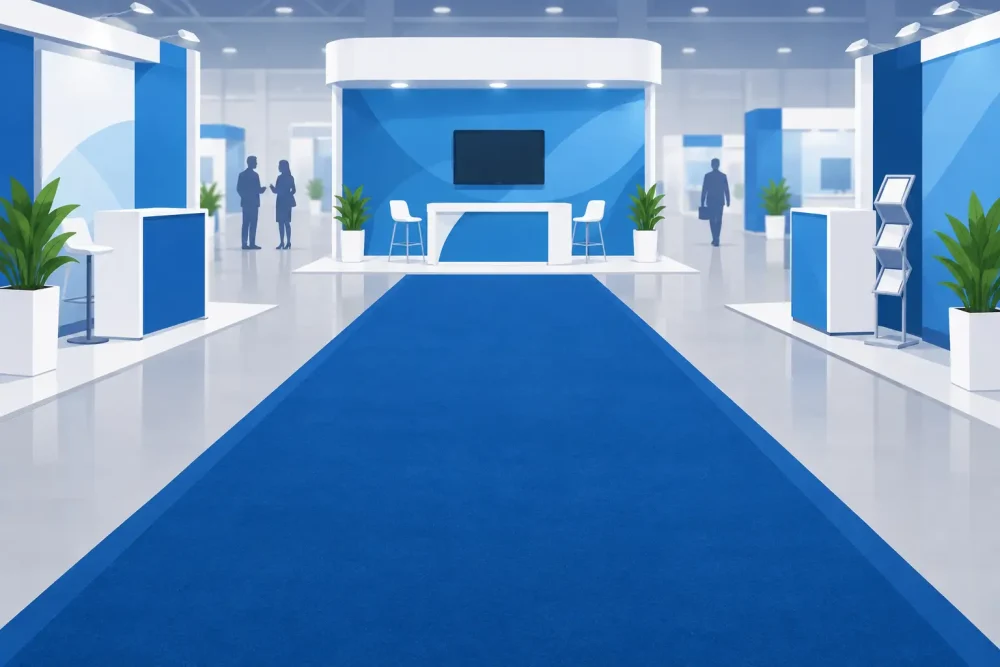
A trade show booth carpet runner does more than cover a convention-center floor. It creates a clear arrival point, directs traffic toward the experience you have built, and gives guests a visual cue that your brand owns this space. On a crowded show floor filled with hard surfaces, competing displays, and constant movement, the right runner can make a modest footprint feel intentional and a major activation feel complete.
For exhibitors, the best choice balances visual impact with practical realities: booth dimensions, traffic volume, venue rules, installation time, and how the surface will look under event lighting and in photos. A striking color matters, but so do clean edges, secure placement, and a material that holds its appearance through a long show day.
Start With the Booth Experience, Not the Floorplan
Before selecting a color or material, consider the route you want attendees to take. A runner can lead visitors from the aisle to a product demonstration, reception counter, lounge area, or photo moment. In a 10-by-10 booth, a narrow runner may create a focused path without crowding the display. In a larger island booth, several coordinated runner sections can define zones for meetings, hands-on product trials, and hospitality.
Think about what happens during peak traffic. A path that looks elegant when the booth is empty can become a bottleneck once people stop to talk, scan badges, or watch a presentation. Leave enough clear floor area for attendees to pass in both directions, especially around entrances and popular display features.
The runner should also support your sightline from the main aisle. When someone sees your booth from 20 feet away, the floor treatment should reinforce the message already visible in your graphics, fixtures, and product displays. It is not an isolated detail. It is part of the environment that invites people in.
Choose the Right Trade Show Booth Carpet Runner Size
Standard runner sizes are often ideal when the goal is a straightforward aisle treatment or branded color accent. Measure the usable floor area rather than relying only on the booth size listed in your exhibitor packet. Columns, utility boxes, display walls, furniture, and required clearance can all change the actual dimensions available.
A runner that is too narrow may disappear under the visual weight of large displays. One that is too wide can make the booth feel closed off or interfere with the placement of furniture. As a general planning approach, allow the runner to frame a path or destination rather than trying to cover every open inch of flooring.
Custom sizing is worth considering when the booth has an unusual footprint, curved architecture, multiple entrances, or a specific guest-flow plan. It is also the better choice when the runner must end precisely at a step-and-repeat wall, vehicle display, stage edge, reception desk, or branded photo backdrop. A tailored piece looks deliberate because it is deliberate.
Plan for Edges, Turns, and Transitions
Straight runs are the simplest to install, transport, and secure. If your concept calls for curves, angles, cutouts, or connected sections, provide a detailed floorplan early. Complex shapes can create a standout branded experience, but they require more production lead time and more attention during installation.
Also consider transitions between the runner and surrounding flooring. High-profile edges can become a trip concern, particularly where traffic moves quickly. A low-profile material and properly placed installation tape help create a cleaner, safer transition. Confirm any requirements with the venue or general service contractor before show day.
Select Material for the Conditions on Site
Convention halls, hotel ballrooms, outdoor tents, and temporary pop-up spaces each ask different things of event flooring. A plush decorative surface may be perfect for a VIP lounge or photo area, while a durable carpet runner is usually the practical choice for a high-traffic aisle. Turf can bring texture and energy to a sports, wellness, travel, or outdoor-lifestyle activation.
For indoor trade shows, choose a material that photographs well under overhead lighting and stays presentable after repeated foot traffic. Darker colors can hide minor marks, while bright white and pale tones deliver a polished, editorial look but demand more care during setup and throughout the event. Red remains a classic choice for an awards-style arrival, but a runner does not need to be red to feel high-profile.
Outdoor or semi-outdoor activations need additional planning. Moisture, uneven surfaces, wind exposure, and temperature changes can affect both the runner and the installation method. A material suitable for exterior use and a secure fastening plan are essential. If weather is a possibility, build a contingency into the production schedule rather than making a last-minute flooring decision.
Use Color and Branding With Purpose
A carpet runner can be an extension of your campaign palette, but color should serve the event objective. Saturated hues can stop traffic and create strong photos. Neutral tones often help products, signage, or a colorful logo remain the focal point. Black can feel sleek and premium, while charcoal offers a similar effect with a slightly softer visual presence.
For brand activations, Pantone-matched colors, logo rugs, and printed graphics can turn the floor into an active part of the campaign. This is especially effective at entrances, photo stations, experiential checkpoints, and product-launch reveals. The key is placement. A logo under a crowd, cocktail table, or queue line may receive little meaningful visibility. A logo placed at a natural pause point is more likely to appear in attendee photos and event coverage.
Avoid treating the runner as a billboard with no breathing room. A well-designed logo rug has scale, contrast, and clear margins around the artwork. If the booth already includes large-format walls and digital displays, a color-matched runner may create a more refined result than adding another oversized message underfoot.
Secure the Runner for a Clean, Professional Finish
A beautiful runner that shifts, curls, or wrinkles will quickly pull attention away from the booth. Installation is where aesthetic planning becomes operational execution. Use event-appropriate carpet tape selected for the venue floor and the runner material. Test adhesion when possible, particularly on polished concrete, tile, low-pile carpet, or surfaces with protective coatings.
The installation team should begin with a clean, dry surface. Unroll the runner, allow it to settle flat, align it from the most visible edge, and secure it according to the traffic pattern. Do not assume a few pieces of tape at the corners will be enough for a busy public path. Perimeter security and attention to seams are especially important for long runs and high-traffic entrances.
Bring a small repair kit to the show: extra tape, a utility tool approved for the venue, cleaning supplies appropriate for the material, and a plan for handling spills. Trade shows move fast. A quick response to a lifted edge or tracked-in debris protects both guest safety and the polished look of the booth.
Order on a Timeline That Protects the Event
Ready-to-order standard runners can be a smart answer for straightforward booth layouts and compressed schedules. For eligible products, fast shipping can keep a last-minute exhibit from looking unfinished. Still, delivery speed should not replace proper planning when the project involves custom dimensions, a specific color match, logo artwork, or specialty cuts.
Custom work needs time for design review, proof approval, production, and transit. Build in room for revisions, particularly when multiple stakeholders need to approve logos or brand colors. Share final dimensions, artwork files, installation location, and event dates as early as possible. A production partner can recommend workable options, but accurate information at the start prevents avoidable changes later.
If the runner will travel with your exhibit to multiple cities, plan for storage and reuse. Ask how it should be rolled, protected, and transported between stops. A reusable runner can offer value across a roadshow, but only if the material and finish suit repeated installation.
Make Every Step Part of the Brand Story
The strongest booths create a feeling before a representative says a word. Flooring helps establish that feeling at ground level, where every attendee physically enters the brand environment. Whether you need a clean aisle path, a vivid custom color, a logo-forward arrival moment, or turf that changes the mood of the entire space, the runner should earn its place in the design.
Event Rugs can help turn a standard floorplan into a more memorable guest experience, from ready-to-ship aisle runners to custom pieces built around your booth and brand. Choose a runner that photographs beautifully, installs confidently, and gives visitors a reason to take that first step toward your display.