



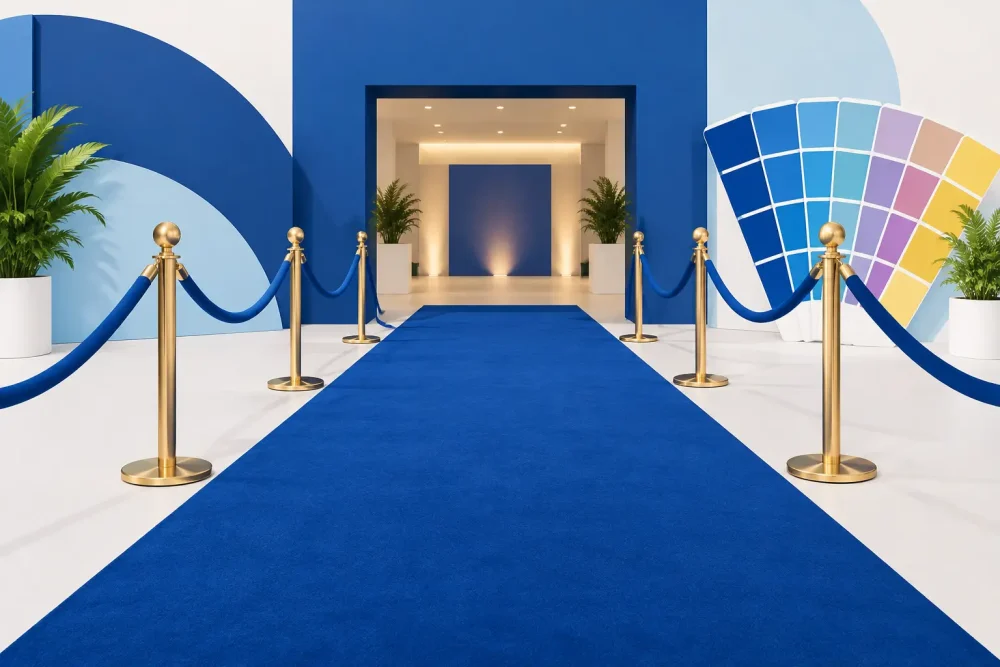
A custom Pantone color carpet does more than cover a floor. It carries a brand color from the invitation, campaign, or step-and-repeat into the guest experience itself. When attendees arrive, walk the entrance, pose for photos, or take their seats, the color beneath them becomes part of the event’s visual signature.
That impact is especially valuable when the color cannot be approximated. A standard red runner may work for a classic awards entrance, but it will not necessarily match a vivid product-launch orange, a university’s signature blue, or the exact blush tone planned for a wedding ceremony. Custom color carpeting gives planners a way to make the floor feel intentional, polished, and fully connected to the event design.
Why a Custom Pantone Color Carpet Changes the Room
Color has a practical job at an event: it directs attention. A saturated aisle runner can pull guests toward the ceremony focal point. A branded walkway can lead visitors from registration to an activation. A custom carpeted runway can frame apparel, vehicles, products, or talent without competing with the presentation.
Pantone matching takes that effect a step further. Rather than selecting the closest available shade, the project begins with a specific color reference. This is a strong choice for corporate teams protecting brand standards, production agencies building campaign environments, and planners who need décor, florals, signage, and flooring to read as one cohesive design.
It also photographs differently than a generic flooring color. Event photography and video pick up large fields of color immediately. When the carpet supports the rest of the set, photos feel more composed before a guest ever reaches the backdrop. For launches, galas, premieres, and fashion events, that consistency can make the space look more elevated on camera and in person.
Start With the Event, Not Just the Swatch
A Pantone reference is the right starting point, but it is not the only decision. The best carpet specification depends on how the event will use the surface. A short indoor photo moment with controlled foot traffic has different requirements than an outdoor entrance exposed to wind, moisture, rolling equipment, and hundreds of guests.
First, establish where the carpet will go and what it needs to accomplish. Is it an aisle, a VIP arrival path, a retail-style brand installation, a runway, or a full room treatment? Then consider traffic. Heel traffic, strollers, carts, camera gear, and frequent guest movement all affect the preferred material, width, and method of securing the carpet.
Lighting deserves equal attention. Warm ballroom lighting can make a cool gray read warmer. Daylight can reveal undertones that were barely noticeable in a warehouse or office. Stage lighting, colored uplighting, and LED walls may all shift the way a custom color appears. For high-visibility projects, review a physical color or production sample under lighting similar to the event environment whenever timing allows.
What to Include in Your Custom Carpet Request
A clear quote request moves a custom project forward faster and reduces last-minute adjustments. The production team needs enough information to translate a color concept into a usable event-flooring solution.
Provide the Pantone color reference, the desired finished width and length, and whether the carpet needs a rectangular, curved, angled, or cut-out shape. Include the event date, delivery location, installation date, and whether the surface is indoors or outdoors. If a logo, border, pattern, or directional graphic is part of the plan, send the approved artwork and explain where guests will enter, walk, and photograph.
It is also helpful to share the floor type. Carpet behaves differently over concrete, tile, hardwood, grass, turf, and temporary subflooring. A venue with uneven outdoor terrain may need a different approach than a smooth convention-center floor. Details like these help determine whether the runner needs installation tape, a specific backing, extra protection at transitions, or a modified layout.
For a clean production brief, make sure your team can answer these five questions:
- What exact Pantone color should the carpet match?
- What finished dimensions and shape are required?
- Where will it be installed, and what is beneath it?
- How much foot traffic and equipment traffic will it receive?
- When must it arrive and be ready for installation?
Color Matching Is Precise, But Conditions Still Matter
Pantone references create a disciplined target, not a promise that every material and lighting condition will look identical. Carpet fibers have texture and pile direction. Those characteristics reflect light differently than printed paper, painted signage, fabric drape, or a digital screen. A color may also look lighter or darker depending on the surrounding walls, the direction of the fibers, and the venue’s illumination.
That is not a reason to avoid custom color. It is a reason to plan like a production professional. If the exact appearance is critical, allow time for approval before full production. View the color beside key design elements such as a stage drape, product packaging, floral palette, branded wall, or printed collateral. This is particularly useful for tonal colors like creams, taupes, grays, soft pinks, and deep blues, where a subtle shift can be noticeable.
Think about maintenance during the event as well. Pale colors can look striking for weddings and luxury activations, but they show dirt more readily at busy entrances. Very dark carpets create drama and can conceal some marks, although lint, confetti, and light-colored debris may stand out. If the walkway will be used for several hours or multiple days, plan for floor protection, careful installation, and a team member who can spot-clean or manage debris between guest arrivals.
Sizing the Carpet for Guests, Cameras, and Furniture
The right width is not simply the widest dimension that fits the room. It should feel generous enough for the intended use while leaving room for architecture, seating, barricades, florals, or lighting. A wedding aisle needs enough space for a couple and wedding party to move comfortably. A photo arrival path may need room for guests to pause, turn toward cameras, and pass one another without stepping off the carpet.
Length should account for the full visual journey. For an entrance, begin the carpet where guests first transition into the event experience, not just at the door. For a ceremony, carry it all the way to the focal point so the aisle does not appear to stop short. For an activation, include enough surface around the branded feature that photographs retain the color story in the frame.
Custom shapes can solve space-planning problems that standard runners cannot. Curves can soften a lobby route. Angled ends can align with a stage or scenic element. A carpet cut around an existing platform, column, product display, or seating island can make the installation look built for the venue rather than placed in it.
Build Enough Time Into the Production Schedule
Custom color work is not the same as ordering an in-stock aisle runner. Color matching, material selection, dimensions, fabrication, quality review, and freight planning all require lead time. The earlier a project is defined, the more options a planner has for samples, approvals, custom shapes, and delivery coordination.
If the event is approaching quickly, be candid about the deadline from the first conversation. A capable event-flooring partner can assess whether the desired approach is realistic, recommend alternatives when it is not, and identify which decisions need immediate approval. Sometimes a custom Pantone carpet is exactly right; sometimes an available color, a branded logo rug, or a smaller custom feature delivers the visual impact within a tighter schedule.
Delivery planning matters just as much as production. Confirm who will receive the shipment, where it can be stored, whether loading-dock appointments are required, and how the material will reach the installation area. Large venue projects often fail on details like elevators, security check-in, dock access, and limited setup windows, not on the carpet itself.
Installation Is Part of the Finished Look
Even a beautifully matched carpet can lose impact if corners curl, seams show, or the runner shifts underfoot. Installation should be planned around the floor, the carpet dimensions, guest safety, and the removal schedule. Use appropriate securing materials, keep transitions smooth, and avoid creating trip points near doors, stairs, or high-traffic turns.
For outdoor events, inspect the site before installation if possible. Grass, concrete, pavers, tent flooring, and temporary decking each present different conditions. Wind exposure and moisture can change the plan quickly. For long runs or complex layouts, professional installation coordination can protect both the appearance of the carpet and the guest experience.
Event Rugs works with custom projects ranging from elegant ceremony aisles to large-scale branded environments, helping planners align color, dimensions, and practical installation needs before event day. The strongest result comes from treating flooring as a visible production element, not an item added at the end of the checklist.
When the carpet color is right, guests may not describe the technical work behind it. They will simply feel that every detail belongs together, from the first step through the final photograph.