



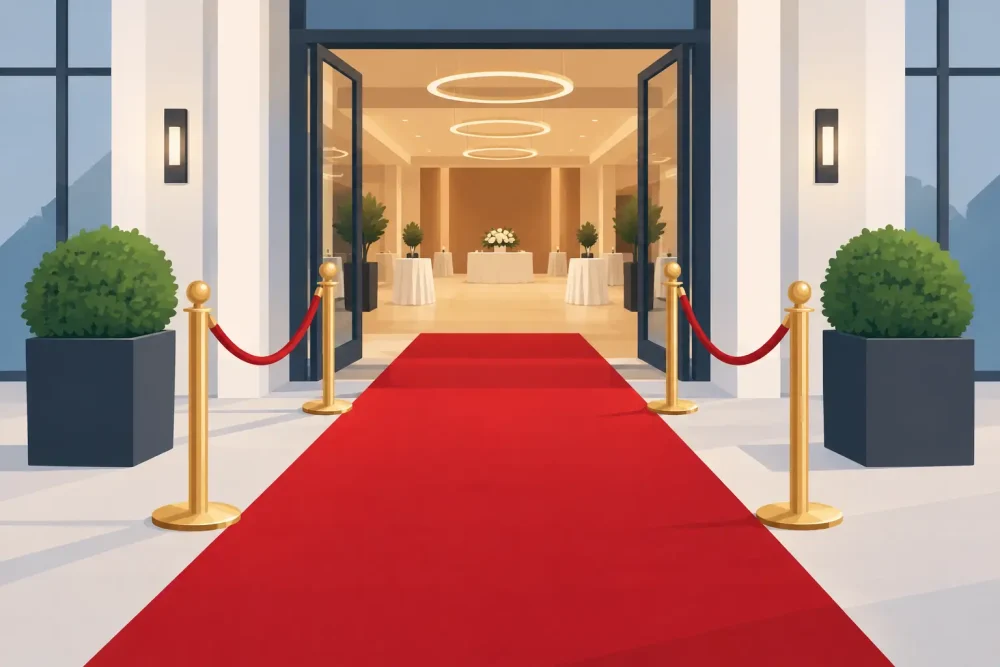
A ballroom entrance can be beautifully decorated and still feel unfinished if guests are walking across exposed concrete, worn venue carpet, or a floor that does nothing for the occasion. Custom rugs change that first impression. They create a defined arrival experience, guide the route, support the theme, and give cameras a polished surface that looks intentional from every angle.
For a wedding, that might mean a soft white aisle runner cut precisely for a ceremony layout. For a product launch, it can mean a logo rug in brand colors that carries guests from curbside to check-in. For a fashion show or gala, it may be a bold runway that makes every entrance feel fit for the stars. The right rug is decorative, but it also solves real production problems.
Start With the Event Path
The best custom rug begins with where people will actually walk. Measure the full usable route, not just the length that looks good on a floor plan. Include the distance from a doorway to registration, the ceremony aisle from first row to altar, or the complete step-and-repeat approach from arrival point to photo position.
Width matters as much as length. A narrow runner can create an elegant, intimate aisle, while a wider rug gives photographers room to capture a couple, wedding party, or VIP group without showing bare flooring at the edges. For branded entrances, consider whether guests will walk one direction, pause for photos, or queue alongside the rug. Those different behaviors call for different dimensions.
Also account for the space around the rug. A runner that reaches the exact edge of a doorway can look crowded. Leaving a deliberate border, or extending the material beyond a threshold, often produces a more finished result. In a large venue, a custom size can prevent the visual compromise of piecing together several standard runners.
Choose Custom Rugs for the Surface and Setting
A rug that looks remarkable indoors may not be the right choice for a windy exterior walkway, damp grass, or high-traffic loading area. Material selection should match the event environment, the anticipated foot traffic, and how long the flooring needs to perform.
For indoor ceremonies, receptions, galas, and retail-style activations, event carpet can add color and softness while covering an existing floor. It is a strong choice when the goal is a clean visual field for an aisle, runway, display area, or entrance. Carpet also photographs well under directional lighting, helping define a path without excessive glare.
Outdoor events require a little more planning. Turf-style runners can bring a fresh, finished look to patios, lawns, rooftops, and temporary event areas. Carpet runners can work outdoors as well, provided the surface is reasonably level and the product is secured correctly. If rain is possible, plan for drainage, access to covered storage, and an installation approach that will not create a slipping or tripping hazard.
Durability is not just about the number of guests. Consider shoes, equipment, and timing. A wedding ceremony with guests arriving once has different demands than a multi-day convention with rolling cases, staff traffic, and repeated photo opportunities. Let the real conditions drive the choice, rather than choosing solely from a color swatch.
Plan for the Floor Beneath It
Before ordering, identify the floor material and any venue restrictions. Smooth concrete, hardwood, tile, low-pile carpet, grass, and pavers each behave differently. Some surfaces accept installation tape well; others require lower-tack solutions or may prohibit adhesives altogether.
An uneven surface may need extra attention at seams and edges. A rug can conceal a less-than-perfect floor, but it cannot correct major dips, loose pavers, or exposed cords. Address those issues before installation. The most glamorous entrance still needs to be safe for heels, gowns, wheelchairs, carts, and high-volume guest flow.
Make Color Work Harder
Color is one of the fastest ways to establish mood. A white or ivory aisle runner can feel classic and ceremonial. Black can bring a formal, editorial edge. Red remains a natural choice for premieres, awards events, and VIP arrivals, while saturated colors can make brand activations and fashion events instantly recognizable.
Custom colors are especially valuable when the rug needs to match an established palette. Corporate teams may need a close Pantone match for a campaign. Wedding planners may be coordinating linens, florals, stationery, and lighting. In those cases, a generic shade described as blue, green, or blush may not be specific enough.
Keep lighting in mind before finalizing a color. Daylight, ballroom uplighting, flash photography, and LED screens can all shift how a material appears. Dark colors may create a dramatic stage for light gowns or colorful apparel, but can make a space feel smaller. Light colors brighten an entry and show up beautifully in photos, though they reveal dirt and debris more quickly. There is no universal best choice. It depends on the aesthetic, venue conditions, and how the rug will be used throughout the event.
Put Branding Where Guests Will Notice It
A custom rug can carry a logo, monogram, campaign graphic, sponsor recognition, or directional message. Unlike a sign placed off to the side, branded flooring becomes part of the guest journey. It is visible during arrivals, social content, photography, and wide shots of the space.
The design should be scaled for the viewing distance. A mark that looks crisp on a laptop may be too small to read from the entrance or in a full-body photo. Leave breathing room around logos, avoid overly fine details, and think about where feet will land. For a photo moment, the most important graphic may need to sit behind or beside guests rather than directly under them.
Orientation matters too. A logo viewed from the entrance should face arriving guests; a logo intended for overhead photography may need an entirely different placement. If the event has a single primary camera angle, build the rug design around that shot. It is a practical decision that can make branded photos look more considered without adding more décor.
Create Shapes That Serve the Layout
Rectangular runners are versatile, but they are not the only option. Custom rugs can be cut to frame a circular ceremony, follow a curved walkway, create a stage boundary, or fit around architectural features. A shaped rug can make a temporary space feel designed specifically for the event rather than simply decorated.
This is particularly useful in venues with unusual footprints. A narrow corridor that opens into a wide reception room may call for a runner that widens at the end. A product display can benefit from a rug that mirrors a logo silhouette. A wedding ceremony with chairs arranged in the round may need a curved aisle rather than a straight path.
Complex shapes require careful measurements and clear production details. Share the widest and longest points, note columns or obstructions, and provide a simple layout drawing when possible. A few extra minutes spent confirming the footprint can prevent costly on-site adjustments.
Treat Installation as Part of the Design
The rug is only as polished as its installation. Loose corners, visible tape, ripples, and shifting edges distract from the look and can create safety concerns. Build installation time into the event schedule, especially for large formats, custom cuts, or outdoor layouts.
The surface should be clean and dry before the rug is placed. Roll it out in the intended direction and allow it to relax before securing, particularly after shipping. Use event-appropriate carpet tape or other approved securing methods at edges, seams, and high-traffic points. If the venue requires a specific tape type, follow that rule rather than assuming a standard adhesive is acceptable.
For a high-profile event, assign someone to inspect the route before doors open. They should check corners, transitions, debris, and any areas affected by weather or heavy traffic. This small step protects both the guest experience and the visual standard of the event.
Give Custom Production Enough Lead Time
Custom dimensions, Pantone-matched colors, printed graphics, and specialty shapes take more coordination than standard runners. Start with the event date, desired in-hand date, shipping destination, and installation window. Then work backward to allow time for design approval, production, transit, and a margin for the unexpected.
If the deadline is tight, simplify where it makes sense. A standard-color carpet with a custom cut may be faster than a fully printed graphic treatment. A bold logo zone at the entrance may deliver more impact than trying to brand every square foot. The right solution balances creative ambition with the timeline you actually have.
At Event Rugs, custom projects can be planned around dimensions, color requirements, logos, cut-outs, and the realities of the venue. Whether the project is a simple personalized aisle or a large-scale branded installation, the goal is the same: make every step look intentional, arrive ready for the moment, and hold up through the final guest exit.
A custom rug does more than cover a floor. It gives an event a starting line, a signature look, and a path guests will remember long after they have walked it.