



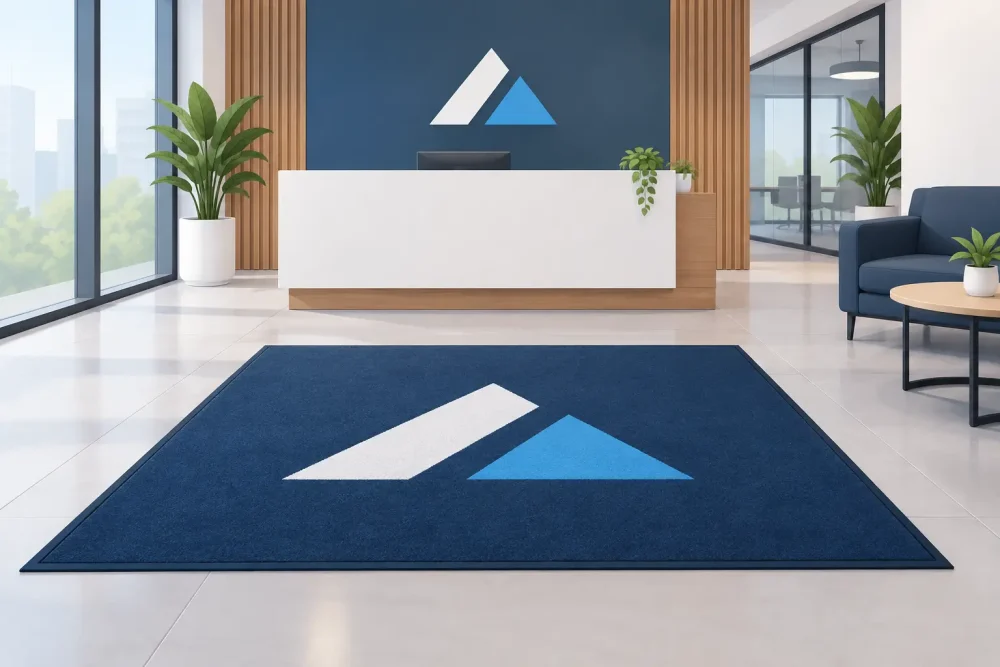
A guest’s first photo, first step, and first impression often happen before they reach the room. Logo carpets turn that transition into a branded experience, giving event entrances, walkways, stages, and activation spaces a polished visual anchor that works from every camera angle.
For a corporate gala, product launch, fashion show, or hospitality event, a custom carpet does more than display a mark. It sets the tone, directs movement, protects flooring, and gives sponsors or brands a presence guests can literally walk into. The right choice depends on where it will be used, how long it needs to perform, and what the finished space needs to say.
Why Logo Carpets Make an Event Feel Intentional
Branding is most effective when it belongs in the environment rather than competing for attention from a sign in the corner. A logo rug places your visual identity where guests naturally look: at an entrance, along a queue, beneath a photo moment, or at the threshold of a VIP experience.
That placement is practical as well as memorable. Runners can define a clear route through a large venue, separate a branded zone from an open floor plan, or bring visual order to a temporary setup. At outdoor events, they can make grass, pavement, or uneven-looking surfaces feel more finished. Indoors, they can cover worn flooring or help protect a venue surface during a high-traffic event.
The best designs are not always the loudest. A clean logo placed on a color-matched carpet can feel premium and understated, while a bold repeat pattern may be the right choice for a red-carpet arrival or media backdrop. The decision should follow the event’s viewing distance, photography plan, and overall design language.
Start With the Guest Journey, Not the Artwork
Before choosing carpet color or logo placement, map the route your guests will take. Where do they enter? Where do they pause for photos? Will there be a check-in line, a ceremony aisle, a press area, or a branded reveal? These answers determine whether one carpet should make a single dramatic statement or whether several coordinated pieces are needed across the venue.
For example, a narrow entry corridor may call for a long branded runner that pulls guests forward. A step-and-repeat area may benefit from a wider logo carpet that frames the full group in photographs. A trade show booth may need custom flooring cut to fit its footprint, with the logo positioned where visitors are most likely to stand.
Consider traffic direction, too. Logos should face the primary camera angle and the incoming guest whenever possible. A mark that looks perfect from the stage may appear upside down in arrival photos. If guests will approach from multiple directions, a centered design, a repeating pattern, or logos oriented at both ends can solve the problem without making the carpet feel crowded.
Choose a Material That Matches the Setting
Material selection affects appearance, durability, installation, and budget. There is no universal best option. A one-night indoor reception has different needs than a multi-day outdoor activation with constant foot traffic.
A plush, elegant carpet can create a formal look for ceremonies, galas, and premium brand experiences. It photographs beautifully and gives guests a sense of occasion, but it may not be the best choice for wet weather or rough exterior surfaces. For outdoor walkways, turf-style runners and durable event carpeting can offer a more dependable solution, especially when the event requires a stable, practical surface.
Think about the conditions around the carpet. Will people arrive in heels? Could rain, mud, drinks, or food be an issue? Is the installation going over concrete, tile, grass, wood, or a temporary platform? Carpet that is right for a clean ballroom may require additional planning when placed on a lawn or sidewalk.
Color also deserves more attention than many planners give it. Bright white feels striking at a wedding or launch event, yet it shows scuffs quickly. Black delivers a sleek, high-contrast setting for logos, but dark artwork can disappear without a border or lighter print treatment. A brand color can create immediate recognition, although an exact match may require custom Pantone matching rather than selecting the closest standard shade.
Plan for photography and lighting
A carpet is part of the lighting plan, whether it is treated that way or not. Glossy flooring, colored uplighting, flash photography, and strong sunlight can all change how a logo reads. Fine details and low-contrast colors may look clear in a digital proof but disappear in a wide event photograph.
Keep artwork bold enough for the space. Strong contrast, clean edges, and a logo sized for the distance of the camera will generally perform better than intricate details. If the brand mark includes a small tagline, consider whether it will still be legible in photos taken from several feet away. Often, the primary logo alone is the stronger choice.
Get the Size and Layout Right
A carpet should fit the event footprint with room for real guest behavior. People rarely walk in a perfect straight line, particularly at a busy arrival, cocktail hour, or photo call. A runner that is too narrow can create a bottleneck and make the space look accidental. One that is too short may leave an awkward gap between the entry and the destination.
Measure the finished usable area, not only the room dimensions. Account for doors that swing inward, stanchions, floral installations, registration tables, scenic elements, and any equipment that may overlap the walkway. When planning a custom shape, provide a clear sketch with dimensions, curves, cutouts, and the intended orientation of the artwork.
For custom projects, request a proof before production and review it as an event document, not merely a logo approval. Confirm the final dimensions, logo scale, direction, color callouts, and placement from each edge. A few minutes spent checking the proof can prevent a costly issue on installation day.
Installation Is Part of the Finished Look
Even a beautifully printed carpet can lose impact if it shifts, curls, or wrinkles at the edges. Proper installation keeps the surface polished and helps reduce trip hazards for guests, talent, staff, and vendors.
The securing method should match the substrate. Installation tape is often used to hold runners in place on suitable hard surfaces, while grass, turf, uneven ground, or temporary decking may need a different approach. Surface condition matters: dust, moisture, textured concrete, and high heat can all affect adhesion. Always test the approach when timing allows, and check venue rules before using tape or other securing materials.
During setup, unroll the carpet carefully and allow it to lie flat before final placement when possible. Work from the most visible end outward, smoothing as you go. Avoid placing heavy furniture directly on artwork unless it is part of the intended design. If the event runs for several days, build in time for daily checks, especially at edges and high-traffic points.
Event Rugs can help planners move from standard runner sizes to custom branded flooring, including unusual dimensions, colors, logos, graphics, and shaped layouts. For a time-sensitive event, confirm production and shipping timing early, particularly when custom artwork approval is part of the schedule.
Common Mistakes That Undercut a Great Design
The most frequent issue is treating the carpet as a last-minute décor item. Custom production, freight planning, venue access, and artwork approval all take coordination. Start early enough to make thoughtful choices rather than settling for an option that does not fit the event.
Another mistake is using a logo that is too small for the carpet. Empty space can be elegant, but a tiny mark floating in the middle of a wide runner may not register in person or on camera. Conversely, an oversized logo can feel distorted or become difficult to photograph as a whole. Scale should reflect the width of the carpet and the expected viewing distance.
Finally, do not overlook the transition at either end. A branded runner should lead somewhere meaningful: a ceremony, product display, entrance, stage, sponsor moment, or photo opportunity. When the destination is visually connected to the carpet, the full experience feels designed rather than decorated.
A logo carpet is one of the few event elements that can guide the guest, support the brand, and elevate the photograph at the same time. Plan it around the real movement of the room, install it with care, and let every step reinforce why guests came.