



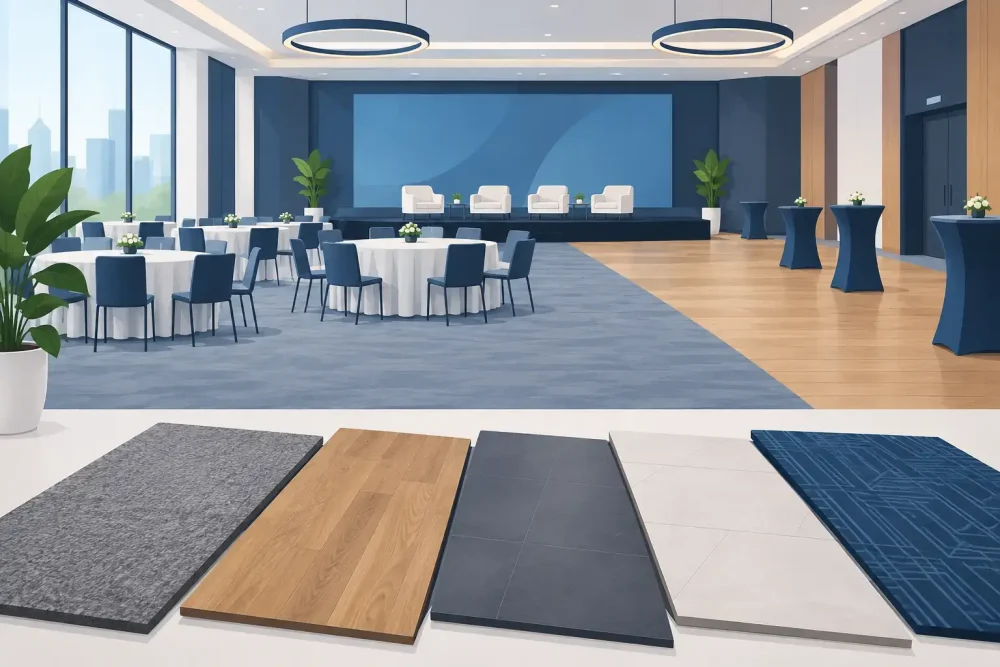
A corporate event can be beautifully lit, expertly catered, and packed with the right guests, yet still feel unfinished the moment attendees step through the door. Bare concrete, scuffed venue carpet, exposed cables, and an undefined entrance dilute the experience before the first conversation begins. This corporate event flooring guide explains how to use runners, carpet, turf, and custom logo rugs to make every arrival, walkway, and brand moment feel intentional.
Start With the Guest Journey, Not the Product
Flooring performs best when it solves a specific event challenge. Before choosing a color or material, map the paths guests will actually take: from curbside or parking to registration, through the main room, toward the stage, bar, photo moment, or product display. Those routes reveal where flooring will have the greatest visual and practical value.
An entrance runner establishes an immediate sense of occasion. A carpeted registration lane can organize arrivals and make a temporary setup feel more permanent. A branded rug at a step-and-repeat or product launch creates a focused, camera-ready destination. In a large ballroom or convention center, runners can break up a broad room into zones without adding walls or bulky décor.
This approach also keeps spending focused. Flooring across an entire venue may be appropriate for a gala, fashion show, or highly produced conference. For a one-evening networking event, a strong entry path and a branded activation zone can deliver more impact than covering square footage guests will barely notice.
Choose Flooring for the Venue Conditions
The right surface depends on where it will be used, how long it needs to perform, and what will happen around it. A runner that looks exceptional at an indoor awards dinner may not be the best choice for a damp outdoor arrival path.
Indoor carpet and aisle runners
Carpet runners are a natural fit for hotel ballrooms, theaters, conference spaces, galleries, and indoor ceremony-style presentations. They add color, soften a hard floor visually, and create a clear route through a busy room. Classic red makes sense for premieres, awards programs, and VIP arrivals, but black, white, navy, gray, jewel tones, and brand colors can be equally effective when they support the event design.
Pay close attention to contrast. A dark runner can anchor a bright lobby, while a light runner can elevate a darker venue. For video-heavy events, avoid selecting a color that disappears against the stage, backdrop, or attendee attire. The floor is part of the frame in nearly every arrival photo.
Turf for outdoor and experiential events
Turf grass runners bring a fresh, tactile look to outdoor brand activations, hospitality lounges, sports-themed gatherings, rooftop events, and patio walkways. They can cover less attractive surfaces while reinforcing a relaxed, elevated atmosphere. Turf is also useful for indoor installations that need a garden, golf, stadium, or festival-inspired setting without relying on living grass.
Outdoor conditions require more planning. Consider whether the ground is level, whether rain is possible, and how guests will move in dress shoes, heels, or equipment carts. A surface that shifts, curls, or collects moisture is not a polished guest experience. Proper securing materials and a clear installation plan matter as much as the turf itself.
Custom rugs for branding and focal points
A custom rug turns flooring into branded media. Logos, taglines, campaign artwork, sponsor marks, product imagery, and Pantone-matched colors can all be incorporated when the event calls for a more tailored statement. These are especially effective at registration, media walls, product demonstrations, photo areas, executive lounges, and stage approaches.
The trade-off is lead time. Standard runners are often the right answer when an event is close and the design is straightforward. Custom rugs need enough time for artwork review, production, and delivery. If your branding is central to the experience, involve the flooring team early, before finalizing the event footprint or creative files.
Size the Flooring to the Space
A runner that is too narrow can feel accidental. One that is too wide can interfere with furniture, door clearances, service paths, or emergency egress. Measure the usable path, not just the room dimensions. Include turns, thresholds, registration counters, stanchions, and any areas where doors need to open freely.
For a straightforward walkway, the runner should comfortably accommodate the direction of traffic without forcing guests into a single-file line. Wider routes are often better for VIP arrivals, photo opportunities, and high-volume registration. If the goal is a fashion-show-style reveal or a dramatic awards entrance, additional width creates stronger visual presence and gives photographers room to work.
Length deserves the same attention. A runner should begin before the moment you want guests to feel the transition and continue through the destination, rather than stopping a few feet short. For longer paths, plan the layout in sections and determine where seams, cuts, or transitions can be least noticeable.
Custom sizing is especially valuable for unusual spaces. Curved paths, oversized lobbies, branded shapes, stage extensions, and installations around columns rarely fit standard dimensions. A custom quote can prevent costly last-minute trimming and help the finished flooring look designed for the venue rather than placed in it.
Build Safety Into the Creative Plan
Beautiful flooring must stay put. Every event plan should account for the subfloor, traffic level, footwear, weather exposure, and venue rules before installation begins. Installation tape and other approved securing methods help reduce shifting edges and trip hazards, particularly at entrances, transitions, and corners.
Ask the venue whether adhesives are permitted and whether residue-free removal is required. Some properties have strict rules for historic flooring, polished stone, wood, or premium carpet. Production teams should also confirm that flooring does not block fire exits, create obstacles at ramps, or cover required signage.
Cable management should be handled as a coordinated decision, not an afterthought. Flooring can help conceal or visually organize certain production paths, but it should never create an uneven walking surface. If cables cross a guest route, use proper cable protection and review the setup with the venue and production team.
For outdoor events, inspect the route shortly before doors open. Wind, rain, dirt, and uneven ground can change the condition of a runner quickly. A small crew check can protect guest safety and preserve the polished appearance you planned for.
Make Brand Colors Work in Real Light
Corporate color guidelines are precise, but event environments are not. A color can look different under ballroom chandeliers, colored stage lighting, daylight, flash photography, and camera exposure. If the flooring must align with an established brand system, Pantone matching and physical samples can be worth the extra planning time.
Think beyond the logo. A branded rug should work with the backdrop, furniture, floral, signage, and attendee flow. A large logo at the center of a busy walkway may be stepped on and partially hidden in photos. The same artwork could be more effective at a pause point where guests naturally stand, such as a check-in desk, photo moment, or lounge entrance.
For sponsor recognition, consider hierarchy. A primary brand can lead at the entrance, while partner logos appear in a dedicated activation or hospitality area. This preserves a premium visual experience without turning every floor surface into an advertisement.
Plan Installation, Delivery, and Removal Early
Event flooring is often one of the last visual elements installed, but it should not be one of the last details planned. Confirm delivery timing, receiving procedures, freight access, loading dock hours, storage limitations, and the venue’s installation window. A runner cannot make an entrance if it is still waiting at a closed receiving desk.
Create a simple installation brief with measurements, placement diagrams, tape requirements, cut locations, and a contact person authorized to make onsite decisions. For large or custom projects, include photographs of the venue and note any stairs, elevators, ramps, or tight turns. These details help avoid surprises when the setup schedule is already tight.
Eligible standard products may be available with fast shipping, while custom logo rugs and specialty configurations require a production schedule that reflects the complexity of the design. Event Rugs can support both ready-to-order needs and custom projects, from a single branded focal point to a coordinated flooring plan across multiple guest areas.
The best corporate flooring does more than cover a surface. It gives guests a clear path, gives photographers a stronger frame, and gives your brand a place to make an impression underfoot. When the floor is planned with the same care as the stage and signage, every step feels like part of the event.