



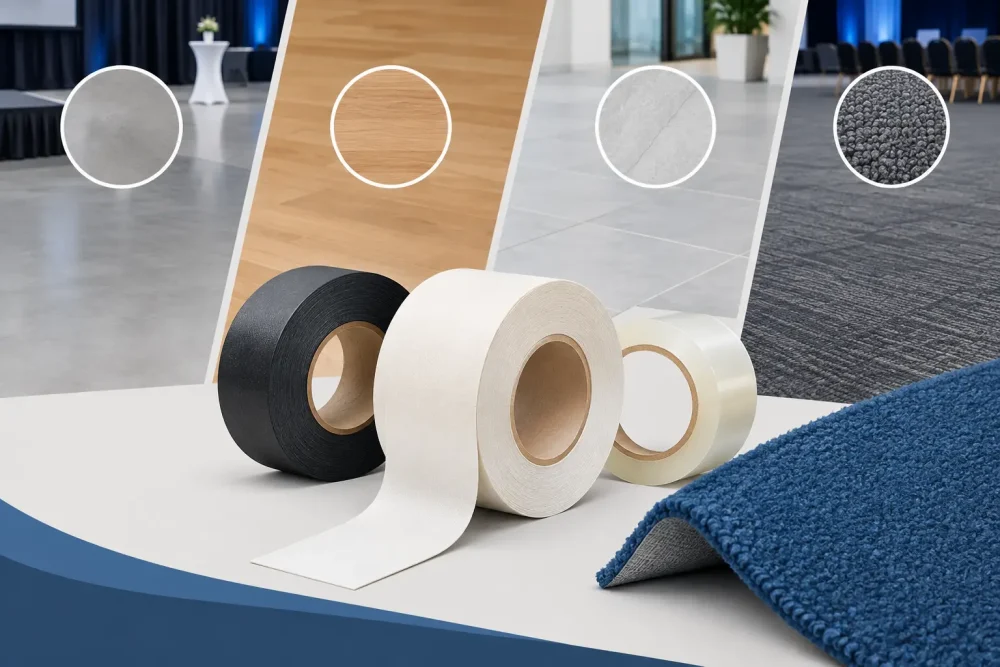
A beautiful aisle runner or branded carpet can change the entire feeling of a room, but a curled edge can change it right back. The best carpet tape for events is not simply the strongest roll available. It is the tape that holds your flooring flat and secure for the duration of the event, then removes in a way that respects the venue floor, the cleanup crew, and your timeline.
For a backyard wedding, a hotel ballroom gala, or a high-traffic product launch, the right choice starts with the surface underneath your runner. Add the carpet backing, expected foot traffic, weather exposure, and removal requirements, and the answer becomes much clearer.
What Makes the Best Carpet Tape for Events?
Event tape has a demanding job. It must prevent a runner from shifting as guests arrive, keep edges from lifting under heels or carts, and preserve the polished look you planned for photos. At the same time, many venues do not allow residue, finish damage, or adhesive transfer on their floors.
That is why adhesive strength alone is a poor buying standard. A permanent, aggressive tape may be appropriate for a long-term commercial installation, but it can be excessive for a four-hour reception on a finished hardwood floor. Conversely, a light temporary tape may look fine during setup but lose its grip when a crowded entrance sees hundreds of guests.
The best option balances four factors: the flooring surface, the runner or carpet backing, the length of the installation, and the conditions the tape will face. A tape that works beautifully on concrete may not be the right choice for polished stone, vinyl, sealed wood, or low-pile carpet.
Start With the Venue Surface
Before ordering tape, ask the venue what is beneath the event flooring and what adhesive products are permitted. This simple conversation can prevent a last-minute change of plans or a damage charge after strike.
Concrete, asphalt, and other rough outdoor surfaces
Rough surfaces need a tape that can reach into small texture variations. A heavy-duty double-sided carpet tape is often the practical choice for concrete walkways, loading areas, patios, and outdoor entrances. Wider tape generally offers more holding power because it creates more contact area.
Outdoor use brings another variable: moisture. Dew, humidity, light rain, and dust can reduce adhesion. Clean and dry the surface before installation whenever possible, and do not assume tape alone will solve a major weather problem. On long outdoor runs, secure the perimeter carefully and consider whether the runner needs additional mechanical fastening that is appropriate for the site.
Finished wood, luxury vinyl, tile, and polished stone
These surfaces require restraint. The goal is firm placement without risking adhesive residue or pulling at a floor finish. Choose a removable, surface-safe double-sided tape specifically intended for temporary flooring applications, then test it in an inconspicuous area if the venue approves.
Avoid applying tape to a dirty or recently treated floor. Wax, cleaning solutions, and moisture can weaken the bond, while a delicate finish may react differently than expected. When the venue is particularly protective of its flooring, document its tape policy in advance and build extra time into installation and removal.
Existing carpet
Installing a runner over carpet can be effective for ceremony aisles, exhibit spaces, and color-blocked event paths, but adhesion depends heavily on pile height. Low-pile commercial carpet is usually easier to tape to than plush residential-style carpet. A stronger temporary carpet tape can hold the runner in place, yet removal should be slow and deliberate to avoid pulling carpet fibers.
For a high-profile installation, do not rely only on tape at the ends. Secure the long edges where appropriate, particularly on narrow runners that could move sideways under traffic.
Match Tape to the Runner Backing
Aisle runners, event carpet, turf, and specialty logo rugs do not all behave the same way. Lightweight nonwoven runners can shift easily, while denser carpet products have more weight but may have stiffer edges that want to lift after unrolling.
For a lightweight runner, use enough tape to prevent both forward movement and edge curl. For a heavier carpet, focus on the perimeter, seams, transitions, and any location where guests will step from one floor level to another. The tape needs to adhere to the backing without bleeding through or distorting the face of the material.
Turf grass runners deserve special attention. Their backing can be less forgiving than standard event carpet, and the pile can hide an uneven edge until someone catches a shoe on it. Tape the backing, not the turf face, and press every secured area firmly before opening the space to guests.
If your event includes a custom-shaped rug, a cutout, or a logo installation, plan the tape layout before the piece is positioned. Curves, corners, and narrow extensions typically need closer support than a simple rectangular runner.
Choose the Right Hold for Your Event Timeline
A one-day wedding ceremony and a two-week brand activation have different requirements. Tape that is designed to remove cleanly after a short event may not be suitable for extended use, especially in warm areas or under continuous traffic.
For most single-day occasions, a quality removable double-sided carpet tape provides the best balance of grip and cleanup. It is a strong starting point for indoor ceremony aisles, red carpet arrivals, ballroom walkways, and temporary branded spaces.
For multi-day events, busy registration zones, fashion show runways, or commercial displays, a heavier-duty option may be justified. Test it first when possible. The longer an adhesive remains on a surface, the more critical the removal process becomes. Heat, direct sunlight, and weight from equipment can also make tape more difficult to lift later.
The tape should support the event, not become an unplanned strike project.
Installation Details That Protect the Finished Look
Even premium tape cannot compensate for rushed installation. Give the flooring time to relax after unrolling, especially if it has been tightly rolled for shipping. Position it first, check that the path is straight and centered, then lift sections as needed to apply tape.
Use continuous strips on critical edges rather than short, widely spaced pieces. This is especially useful at entrances, aisle starts, stage approaches, and any point where a guest might step onto the runner at an angle. For broad runners, add tape across the ends and along both long sides. If two carpet sections meet, tape the seam from underneath or use a suitable seam method so the transition stays flat.
Press the carpet down with even pressure. Do not just step on the tape at a few points and assume it has bonded. Walk the perimeter, inspect corners, and look at the installation from guest eye level. A lifted edge that seems minor during setup can be very visible in event photography.
Keep tape at least slightly back from the visible edge when the runner material is thin. This helps prevent adhesive from showing and reduces the chance of it collecting lint or dust along the edge.
Plan for Foot Traffic, Wheels, and Weather
The guest path tells you where tape matters most. An intimate ceremony with 40 guests may need a different approach than an awards event with queues, photographers, stanchions, and rolling equipment.
Pay particular attention to doorways, transitions from concrete to carpet, areas near food and beverage service, and places where guests turn sharply. High heels can catch a loose edge, while carts and cases can push a runner forward. If a runner crosses a doorway, confirm that clearance is adequate before doors open and close over it.
For outdoor events, carry extra tape to site. Wind can lift edges, and ground conditions may be different from what was expected during a site visit. If rain is likely, determine whether the runner material and adhesive are appropriate for wet conditions rather than treating tape as a last-minute fix.
Removal Is Part of the Installation Plan
A professional finish includes a clean departure. Remove temporary carpet tape slowly, pulling it back at a low angle rather than straight up. This reduces stress on the surface and can minimize adhesive transfer. If the venue requires a particular cleanup procedure, follow it exactly.
Do not wait until the last possible minute to inspect the floor after removal. Check corners, seams, and high-traffic sections while the crew and cleanup supplies are still on site. If residue appears, use only a venue-approved method for that surface.
For complex layouts, photograph the floor before installation and after strike. It is a practical habit for planners, venues, and production teams, particularly when working in premium hospitality spaces or leased event environments.
A Better Tape Decision Starts Before Setup
The right tape is a small detail with an outsized impact on safety, presentation, and peace of mind. Choose based on the actual surface and event conditions, not just the label that promises the strongest hold. Then order enough for the full perimeter, seams, repairs, and a little contingency.
When a runner is custom-sized, logo-branded, or designed for a major guest arrival, include securing supplies in the initial flooring plan. Event Rugs can help teams pair a statement-making floor design with practical installation considerations, so every step looks intentional from first guest arrival through final strike.