



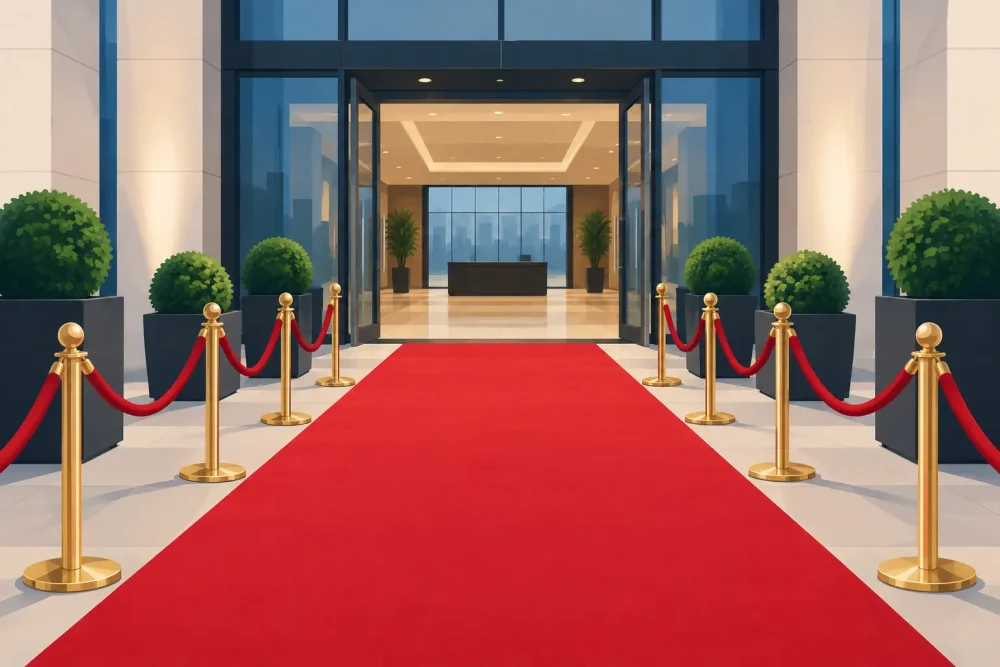
A guest forms an opinion before they reach the check-in table, ceremony seating, or showroom display. The path beneath their feet helps create that first impression. Commercial event carpet turns a plain entry, aisle, runway, or walkway into a purposeful part of the experience – one that can signal luxury, direct traffic, support a theme, and put your brand front and center.
For a wedding, that may mean a crisp white aisle runner framed by florals. For a product launch, it could mean a logo carpet in an exact brand color. For a gala or premiere, it may be a bold red carpet built for arrivals, photography, and a high volume of guests. The right choice is not simply about color. It is about matching material, dimensions, installation, and visual impact to the way people will use the space.
What Commercial Event Carpet Does for an Event
Event flooring is one of the fastest ways to define an environment without changing the venue itself. A runner can create a clear route through a large ballroom, make an outdoor ceremony feel more finished, or establish a polished arrival moment in front of a step-and-repeat. It gives guests an immediate cue: this is where to enter, gather, walk, or look.
That direction matters operationally as much as visually. At crowded events, a defined walkway can improve guest flow and keep traffic away from displays, dining areas, cables, or delicate decor. In open spaces, carpet also creates useful visual boundaries between an activation, VIP area, registration zone, and general event floor.
Photography is another major consideration. Carpet adds color and texture below the subject, helping the setting look intentional from ground-level photos, wide shots, and video. A well-selected runner can reduce the visual distraction of worn concrete, uneven grass, busy venue carpeting, or a generic convention floor.
Choosing Commercial Event Carpet by Use Case
The best event carpet starts with the event’s job to be done. A short entrance runner and a 100-foot branded walkway may both be carpet, but they have different performance requirements.
Entrances, galas, and red-carpet arrivals
For high-visibility arrivals, choose a carpet that delivers a clean, camera-ready surface and enough width for the expected guest traffic. A narrow runner can work for a controlled doorway, while wider carpet is better for photo lines, pairs of guests arriving together, or press-heavy events. Red remains iconic, but black, white, navy, emerald, and custom shades can create a more distinctive look.
Consider the full arrival zone, not just the carpet. If guests will pause for photographs, build enough length for the backdrop, stanchions, lighting, and circulation around the runner. The carpet should look generous in the frame rather than like a small strip placed in front of a larger setup.
Wedding aisles and ceremonies
A ceremony runner needs to complement the setting while providing a defined walk to the altar. White, ivory, blush, and neutral tones remain popular because they work with most floral palettes, but a custom color can make a ceremony feel entirely personal. Outdoor locations often call for a material that can handle grass, packed ground, or patio surfaces without looking out of place.
Width is especially important for wedding aisles. The runner should allow the couple, wedding party, and any escort to walk comfortably without stepping off the edge. Before ordering, account for chairs, aisle clearance, floral installations, and the exact point where the runner will begin and end.
Brand activations, trade shows, and product launches
Branded flooring earns attention because it places the message where guests naturally look and walk. A logo rug, printed graphic, or Pantone-matched carpet can carry the campaign beyond signage and into the physical experience. This is particularly effective at registration, inside a booth, along a product reveal path, or at a photo moment.
For custom work, start the conversation early. Logo placement, graphic scale, custom shapes, cut-outs, color matching, and unusual dimensions all affect production planning. Provide high-resolution artwork and be clear about where the carpet will sit, how it will be photographed, and whether it must coordinate with other branded materials.
Fashion shows and professional productions
Runways need a surface that looks refined under bright lighting and performs reliably through rehearsals, seating turnover, and repeated walks. A matte finish may photograph differently than a shinier material, so test samples or confirm the intended visual effect when color accuracy is critical. Dark carpet can sharpen a dramatic presentation, while white or light neutrals can make garments and set pieces stand out.
Production teams should also consider the transition points at both ends of the runway. Secure edges, clean cuts, and accurate measurements keep the installation polished and reduce last-minute adjustments on show day.
Material, Color, and Size: The Decisions That Change the Result
There is no universal “best” carpet material. The right one depends on venue conditions, duration, foot traffic, and the look you want to achieve. Indoor ballroom events may prioritize a soft, elegant finish. Outdoor events may need turf-style runners or a durable carpet better suited to temporary exterior use. If rain, moisture, wind, or uneven surfaces are possible, build those conditions into the plan rather than treating them as an afterthought.
Color deserves the same practical attention. A pale runner can look striking in a dark venue but may show dirt more easily during a long event. Black hides marks well and feels sophisticated, though it can disappear against dark flooring in photos. Bright colors create energy and brand recognition, while neutral shades offer flexibility when florals, furniture, and lighting are still being finalized.
Measure the route carefully, then add a little room for positioning. Record the usable width and length, noting doors, turns, columns, floor transitions, and furniture footprints. If the path has an unusual shape, a standard runner may not be the right solution. Custom cuts and custom-sized carpet can eliminate awkward gaps and make the flooring feel built into the event design.
Installing Commercial Event Carpet With Confidence
Even the most dramatic carpet loses its effect if it wrinkles, shifts, curls at the corners, or stops short of the intended endpoint. Installation should be planned alongside delivery, load-in timing, and venue rules.
Start with a clean, dry surface whenever possible. Roll the carpet out early enough for it to relax flat, especially after transit. Use event-grade carpet tape or another venue-approved securing method along edges and seams where needed. High-traffic areas, thresholds, and transition points deserve extra attention because they are where movement is most likely to occur.
Outdoor installation requires a closer look at the ground. Grass, pavers, gravel, and concrete each behave differently, and wind can turn an unsecured runner into a safety issue. Ask whether the venue permits tape, stakes, or other fastening methods before arrival. For large-format installations, complex layouts, or public-facing events, assign a crew member to inspect the carpet before guests enter and periodically throughout the program.
When Standard Sizes Work and When Custom Is Worth It
Ready-to-order aisle runners and standard event carpet sizes are ideal when the dimensions are straightforward and the schedule is tight. They offer a dependable way to add impact without extending the planning process, especially for weddings, ceremonies, small arrivals, and simple walkways.
Custom is worth considering when the carpet is central to the brand experience or must solve a specific spatial challenge. That includes oversized entrances, unusual layouts, company logos, printed graphics, exact brand colors, shaped rugs, and large-scale runway or activation flooring. It can also be the smarter choice when several smaller standard pieces would create visible seams in a highly photographed area.
At Event Rugs, both approaches have a place. Some events need a ready-to-ship runner; others need a custom flooring solution designed around the venue, artwork, and guest journey. No event is too big or too small when the plan starts with accurate measurements and a clear vision for the space.
The most memorable event floors do more than cover the ground. They make arrivals feel intentional, help guests know where to go, and give every photo a stronger sense of place. Choose the carpet early, plan the installation carefully, and let the first step set the tone for everything that follows.