



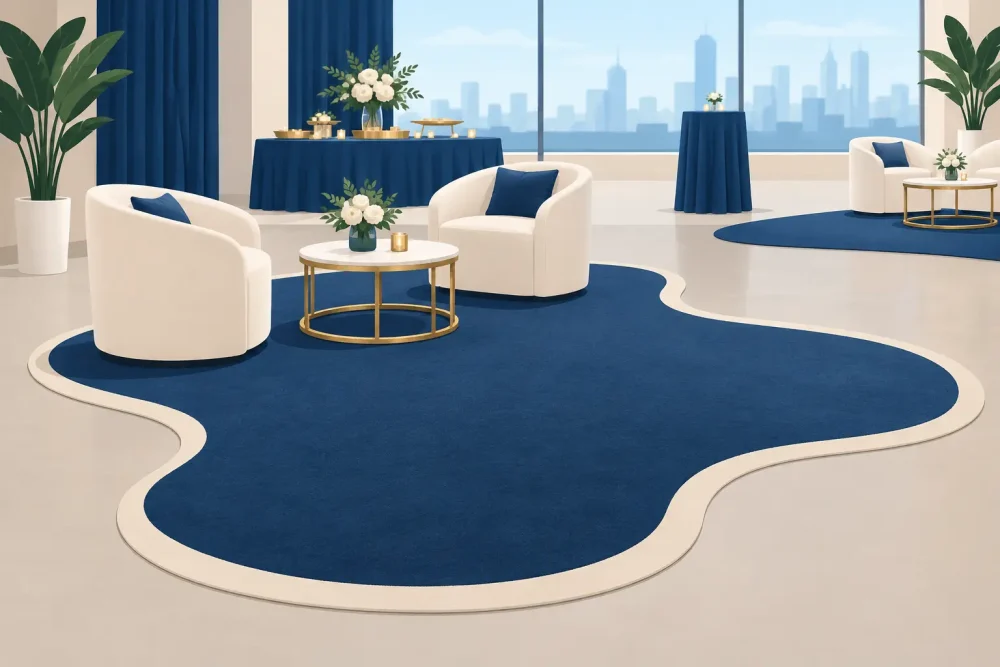
A straight runner can create a beautiful path. But when the floor plan calls for something more memorable – a sweeping curve into a ceremony, a logo-shaped photo moment, or a runway built around a product display – custom shaped event rugs give the space its signature. They turn an overlooked surface into a design feature guests see, follow, and photograph.
For weddings, corporate activations, fashion presentations, galas, and hospitality events, the right shape does more than look impressive. It directs movement, defines an area, supports a brand story, and makes every arrival feel intentional. The strongest designs balance visual drama with practical production details from the first sketch.
When a Custom Shape Makes Sense
Custom rugs are most effective when the architecture or event concept is not naturally rectangular. A curved walkway can soften a large ballroom or guide guests around tables. A circular rug can anchor a ceremony-in-the-round, a lounge vignette, or a product reveal. An oversized monogram, geometric cutout, or silhouette can create a branded focal point without adding a separate platform or backdrop.
For a wedding, the shape might echo the ceremony arch, floral installation, venue doorway, or couple’s monogram. At a brand activation, it may follow the outline of a product, campaign graphic, mascot, or logo mark. Fashion and entertainment events often use shaped carpeting to frame a step-and-repeat area, create a dramatic runway end point, or build a red-carpet arrival that feels fit for the stars.
The key is to give the shape a job. If it only looks interesting from above, it may not deliver enough value onsite. A successful rug should improve the guest experience at floor level by making a destination, route, or moment instantly clear.
Start With the Guest Journey, Not the Outline
Before choosing scallops, curves, angles, or a logo contour, map how people will move through the space. Where do guests enter? Where do they pause for photos? Will servers, strollers, wheelchairs, production carts, or camera operators need to cross the rug? Those answers affect both the final dimensions and how intricate the perimeter can be.
A shape with narrow points or delicate extensions may look excellent in a rendering but can be less practical in a busy environment. High-traffic edges should be broad enough to lie flat and remain easy to secure. If an event includes a formal processional, allow enough width for the people walking side by side, dresses, trains, and photography coverage without crowding the edge.
It also helps to view the design from the audience’s main sightline. A circular rug may read beautifully from a balcony. A long curved runner may make more sense from the entrance or camera angle. Custom flooring becomes part of the event’s visual choreography, so scale should be considered from both overhead plans and eye level.
Designing Custom Shaped Event Rugs for Impact
The most polished custom shaped event rugs usually rely on one strong idea rather than several competing details. A bold contour paired with a clean color can be more powerful than an elaborate outline, intricate print, multiple borders, and oversized graphics all at once.
For branded events, keep logos readable at the distance where guests will actually see them. Fine type, thin linework, and small details can get lost under foot traffic or in event photography. A simplified logo treatment, a large emblem, or a high-contrast graphic often delivers a stronger result. Pantone-matched colors can help the flooring feel like a natural extension of the campaign rather than an added accessory.
For private celebrations, color can establish the mood before guests reach the ceremony or reception. White, ivory, and soft neutral tones feel classic against florals and formal attire. Black creates a striking foundation for editorial-style events. Red remains a natural choice for premieres and VIP arrivals, while turf can bring a fresh outdoor look to indoor installations. The best material and color depend on the venue, lighting, footwear, surrounding décor, and whether the rug needs to support printed graphics.
Material Choices Change the Experience
A custom shape is only as successful as the material chosen for the environment. Indoor carpet runners provide a refined finish for ballrooms, convention centers, banquet spaces, and indoor ceremonies. They photograph well and are available in a broad range of colors for coordinating with draping, florals, staging, and brand palettes.
Turf is a smart option for outdoor-inspired events, sports themes, garden parties, and installations that need a casual, textured look. It can also create visual contrast against polished concrete, tile, or a trade show floor. For outdoor use, assess the surface beneath it carefully. Grass, gravel, pavers, decks, and concrete each call for different preparation and securing methods.
Printed or logo rugs are ideal when the graphic itself is central to the event. They work especially well for sponsor moments, product launches, registration areas, and photo opportunities. If the rug will receive heavy foot traffic, build the design around larger visual elements that continue to look sharp after hundreds of guests have passed through.
Measure the Space Like a Production Team
Custom work starts with accurate information. Provide the usable length and width of the area, but do not stop there. Note door swings, columns, stairs, stage edges, furniture placement, fire exits, and areas that must remain accessible. A room diagram, venue floor plan, or marked-up photo can prevent costly assumptions.
For a curved or irregular shape, include the intended orientation. A teardrop rug facing the wrong direction changes the entire effect. For logo-shaped rugs, send the cleanest available artwork and identify which side guests will approach first. If the design needs to align with a backdrop, podium, aisle, or existing flooring pattern, specify that relationship early.
Leave a comfortable clearance around the perimeter when possible. A rug that nearly touches every wall can make a space feel cramped, while a deliberate border of visible flooring can make the custom shape stand out. There are exceptions: wall-to-wall coverage or a large scenic installation may require a tighter fit. This is where a site-specific plan matters more than a general rule.
Secure the Perimeter Without Compromising the Look
Shaped edges deserve extra attention because they create more perimeter than a standard rectangular runner. A beautiful curve that lifts at the edge can become a trip concern and look unfinished in photos. The rug should be installed on a clean, dry, level surface and secured with an event-appropriate tape or method suited to the flooring below.
The right tape depends on the venue surface and removal requirements. Concrete, carpet, finished wood, tile, and temporary flooring do not always respond the same way. Confirm venue rules before installation, especially in historic properties, hotels, convention centers, and spaces with delicate finishes. Test a small inconspicuous section when there is any uncertainty.
For large-scale designs, plan the installation sequence in advance. Determine where panels meet, how the rug will be rolled or transported through the venue, and who will make final edge checks before doors open. Event Rugs can help quote custom dimensions, shapes, colors, graphics, and the practical accessories needed to keep the finished look secure.
Build in Time for Production and Setup
Custom production is not a last-minute category. Artwork approval, color review, cutting, printing, finishing, freight, and venue delivery all need room in the schedule. A simple shape may move faster than a detailed contour or a fully printed design, but timing depends on material, quantity, complexity, and shipping destination.
If the event date is fixed, work backward from installation rather than from the day guests arrive. Factor in venue receiving hours, loading dock access, elevator restrictions, setup windows, and a contingency day whenever possible. This is particularly important for destination events and high-visibility activations where a replacement is not easy to source at the last minute.
A custom rug should arrive as a finished part of the event plan, not as an unanswered production question. Share approved dimensions with planners, florists, staging teams, photographers, and venue contacts so surrounding elements do not creep into the intended footprint.
The floor is where every guest begins their experience. Give it a shape that leads somewhere worth remembering.