



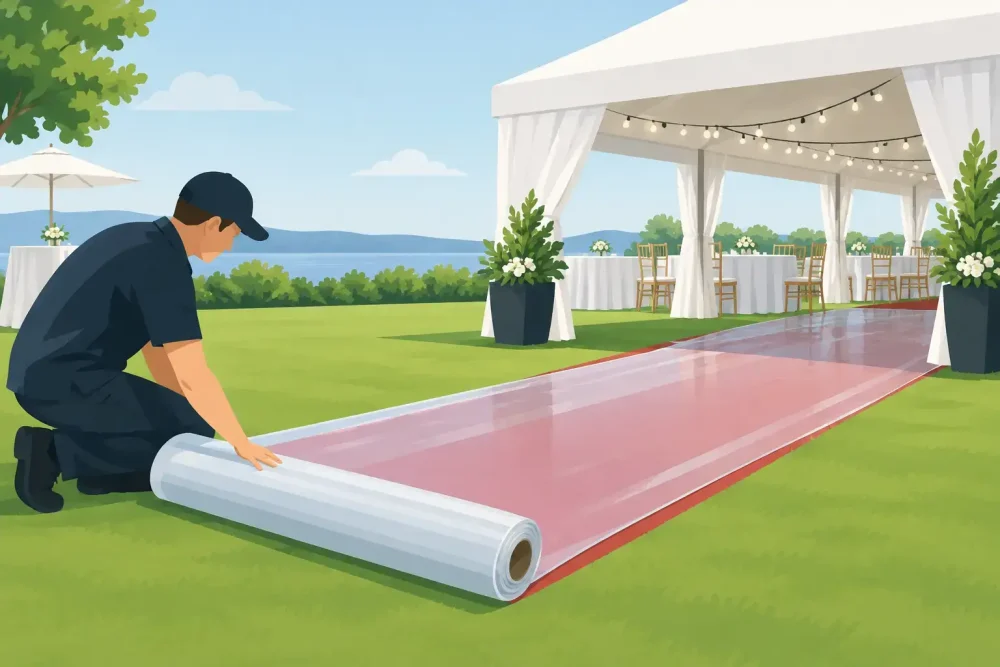
An outdoor carpet can turn a bare lawn, patio, parking area, or waterfront venue into a guest-ready arrival experience. But one unexpected shower, loose corner, or muddy heel can change the look quickly. Knowing how to protect carpets outdoors means planning for the surface beneath the rug, the weather above it, and the volume of traffic across it – before guests arrive.
For weddings, red-carpet arrivals, brand activations, fashion shows, and grand openings, the goal is not simply to keep the runner clean. It is to create a polished walkway that stays secure, photographs beautifully, and gives guests a confident place to step.
Start With the Ground, Not the Carpet
The condition of the installation area determines how well any outdoor runner will perform. A carpet placed over dry, level concrete has very different needs than one installed on soft grass or uneven pavers. Walk the site at the same time of day as the event if possible. Morning dew, afternoon heat, drainage patterns, and sun exposure all affect the setup.
Sweep hard surfaces thoroughly before installation. Grit, leaves, and small stones can create visible bumps under a low-pile runner and may wear through the backing under heavy foot traffic. On grass, mow and clear the area shortly before the event, then check for sprinkler heads, holes, exposed roots, and damp spots.
If the ground is soft, saturated, or highly uneven, a carpet alone may not be enough. Consider a temporary subfloor, deck panels, or another stable walking surface beneath the runner. This adds cost and setup time, but it is often the right call for a formal ceremony aisle, a high-heel-heavy guest list, or a branded walkway where every photo matters.
Choose an Outdoor-Ready Material and Color
Not every carpet is designed for the same job. For a short outdoor event, an event runner can provide a dramatic visual effect without the expense of permanent flooring. The material should fit the venue, expected foot traffic, and forecast.
Needle-punch and other durable event-carpet materials are popular because they create a clean, consistent surface, cut easily for custom shapes, and work well for entrances, aisles, and step-and-repeat areas. Turf-style runners can be especially practical for garden events and casual outdoor activations because they visually belong in an outdoor setting while helping define a path.
Color is also a protection decision. White and ivory runners are classic for weddings, but they show wet footprints, grass stains, and soil immediately. They are best reserved for covered locations, dry weather, or short ceremonial use. Darker colors, heathered tones, and printed designs are more forgiving for high-traffic outdoor entrances. A custom logo rug can also place branding where it will be seen while using a background color that hides ordinary event-day wear.
How to Protect Carpets Outdoors From Moisture
Water is the biggest threat to the appearance and stability of an outdoor carpet. Rain can soak fibers, create muddy tracking, and weaken the bond of some adhesives. Dew can be just as troublesome for an early ceremony or product launch, especially when a runner is installed on grass before sunrise.
Start by keeping the carpet rolled and protected until the installation window. Do not unroll it hours early on a damp lawn simply for convenience. If the schedule allows, install after dew has lifted and as close to guest arrival as practical.
A moisture barrier can help when a runner must sit over damp ground, but it needs to be selected carefully. A non-breathable sheet may trap water underneath and become slick if water reaches the top surface. For long installations, work with a flooring professional or event production team to determine whether drainage, a raised base, or a different location is the safer choice.
If rain is likely, build the weather plan into the event layout rather than hoping the runner will withstand it. Canopies, tented walkways, umbrellas at the entrance, and covered check-in points all reduce the amount of water guests carry onto the carpet. Keep clean replacement runners or a cut length of matching material nearby for a short aisle or VIP entrance. For a major event, a backup installation plan is far more valuable than last-minute spot cleaning in the rain.
Secure Every Edge for Safety and Appearance
A beautiful outdoor runner loses its impact when corners curl or the center shifts underfoot. More importantly, unsecured carpet creates a trip hazard. The securing method should match the substrate – what works on concrete may fail completely on grass.
On clean, dry hard surfaces, professional-grade carpet tape can hold a runner in place without adding bulky hardware. Apply tape along the perimeter and, for wider or longer pieces, add strips beneath the center at intervals. Press the carpet firmly into place and test it by walking the full length in the direction guests will travel.
Grass and soil generally require stakes, pins, or other mechanical fastening options designed for outdoor use. Position them around the perimeter and keep hardware flush so it does not catch shoes or damage the finished look. Avoid using standard tape directly on wet grass or dusty pavement. It may release early, leaving the carpet to shift at exactly the wrong moment.
For any installation, pay special attention to transition points: the first step onto the carpet, the final step off it, door thresholds, and areas where the runner meets another flooring material. These are the places guests tend to shuffle, pivot, or drag luggage and equipment. A clean, secure transition protects both the carpet and the guest experience.
Control Dirt Before It Reaches the Main Walkway
The easiest stain to remove is the one that never reaches the runner. Create a small buffer zone before guests step onto the featured carpet, particularly at lawn entrances, beach venues, and parking-lot arrivals. A utility mat, turf section, or less formal runner can collect loose dirt before guests reach the photo-ready area.
For food-and-beverage events, keep bars, passed appetizers, and coffee stations away from light-colored carpets whenever the layout permits. A champagne spill may be manageable, but dark soda, barbecue sauce, and red wine can become the visual focus of an otherwise flawless entrance.
Have an event-day care kit on site with absorbent white cloths, paper towels, a soft brush, a small dustpan, and an approved spot-cleaning product appropriate for the carpet material. Blot spills rather than rubbing them deeper into the fibers. Test any cleaning solution on an inconspicuous offcut before using it on a visible custom or colored runner.
Plan for Wind, Heat, and Heavy Traffic
Outdoor protection is not only about rain. Wind can lift an unsecured edge, while direct sun can make some surfaces uncomfortably hot and may affect color over extended exposure. For a one-day event, sun fading is rarely the primary concern, but heat and glare can influence guest comfort and photography.
Windy locations call for stronger perimeter securing and a closer inspection schedule. Coastal venues, rooftops, open fields, and streetside activations deserve special attention. Do not assume a heavy-looking carpet will stay flat on its own. A gust can create a raised edge that interrupts foot traffic and photographs poorly.
For high-traffic events, use a wider runner than the absolute minimum. Guests naturally avoid stepping on the edge of a narrow aisle, which concentrates wear down the center and can make movement feel cramped. Allow extra width for dresses, photographers, mobility devices, and two-way guest flow where needed.
It also helps to assign one person to inspect the walkway during the event. They can smooth an edge, remove debris, manage a spill, or redirect guests around a temporary issue before it becomes noticeable. This is a small operational detail that protects a major visual investment.
Install With Removal in Mind
A professional outdoor setup should look intentional at arrival and leave the venue in good condition afterward. Before installation, confirm what tapes, stakes, and adhesives the venue allows. Historic properties, premium patios, and rented tent flooring may have restrictions that affect the securing plan.
When the event ends, remove the carpet carefully and pull tape slowly at a low angle to reduce residue risk. Roll used runners inward so dirt and moisture stay contained. If the carpet is intended for reuse, allow it to dry fully before storing it. Storing a damp runner can lead to odor, mildew, and permanent damage.
The best outdoor carpet installations feel effortless because the preparation happened out of sight. With the right material, a stable surface, dependable securing supplies, and a real weather plan, every step can make a statement – even when the event is held under open skies.