



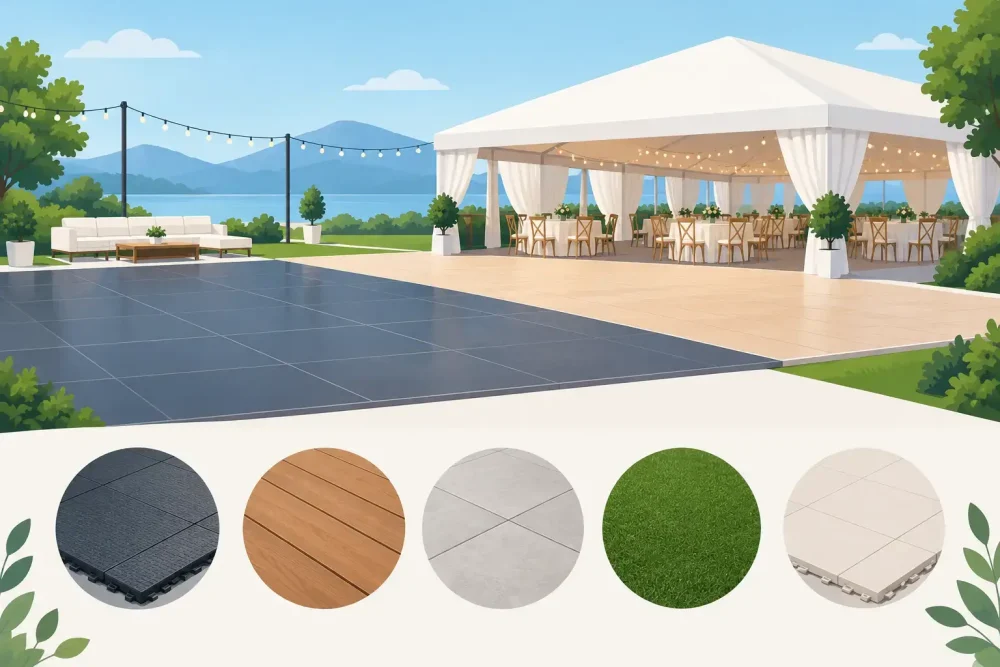
A beautiful lawn, courtyard, rooftop, or beach setting can make an event feel unforgettable. It can also create a practical problem the moment heels sink into grass, a walkway turns muddy, or a brand entrance disappears into an expansive outdoor space. The best outdoor event flooring options do more than cover the ground. They shape guest flow, elevate photographs, support safe movement, and give the setting the polished finish your event deserves.
The right choice depends on the surface beneath it, expected weather, footwear, traffic volume, and the visual statement you want to make. A wedding aisle needs a different solution than a high-traffic product launch, and a red-carpet arrival demands a different finish than a casual garden reception. Start with the function, then choose a material and installation plan that can perform from the first guest arrival through breakdown.
What Outdoor Event Flooring Needs to Handle
Outdoor flooring is working against more variables than indoor carpet. Grass can be soft or uneven. Concrete can retain heat. Sand can shift underfoot. Rain can arrive without warning, and wind can lift unsecured edges. The most successful installations account for those conditions before color and design enter the conversation.
First, consider the base surface. A runner placed on level pavers has a very different installation requirement than one placed on freshly cut grass. Next, think about traffic. A ceremony aisle may see one processional and a few photographs, while a branded entrance or gala walkway may need to accommodate hundreds of guests, production crews, cameras, and rolling equipment.
Finally, consider the experience you are creating. Flooring can direct guests toward check-in, define a runway, set apart a VIP area, or turn an ordinary entrance into a photo-ready arrival moment. Every step makes a statement, but the flooring must stay secure enough for guests to take that step with confidence.
Best Outdoor Event Flooring Options by Use
Outdoor carpet runners for entrances and aisles
Carpet runners are one of the most versatile choices for outdoor celebrations and professional events. They bring instant color, soften hard surfaces, and establish a clear path through gardens, patios, driveways, tented spaces, and venue entryways. They are especially effective for wedding aisles, red-carpet events, award arrivals, grand openings, and formal walkways.
For outdoor use, choose a durable event-grade carpet appropriate for the location and expected foot traffic. A wide runner creates a more dramatic ceremony aisle and gives photographers room to capture the processional. Narrower runners work well for pathways, step-and-repeat approaches, registration lanes, and space definition.
Color changes the entire mood. White and ivory create a classic wedding presentation but need a clean, dry surface to look their best. Black feels polished and modern for galas and fashion events. Bold red delivers instant premiere energy. Custom colors can carry a corporate palette across an entrance, stage approach, or activation footprint.
The trade-off is weather exposure. Carpet can perform beautifully outdoors, but it should be secured properly and selected with the forecast in mind. If rain is likely, plan for a covered route, a replacement runner, or a material that can better tolerate moisture.
Turf grass runners for natural-looking spaces
Artificial turf runners are a smart answer when you want a green, textured look without relying on the condition of the lawn. They work particularly well for garden-themed weddings, outdoor lounges, golf events, sporting activations, kid-friendly celebrations, and entrances where guests need a firmer walking surface.
Turf can also create continuity when the event is spread across mixed surfaces. For example, it can connect a grassy ceremony space to a patio reception area or transform a concrete walkway into part of a botanical brand experience. It photographs well, adds visual warmth, and is generally more forgiving than light-colored carpet when shoes carry in dust or debris.
Keep in mind that turf has a more casual, dimensional appearance than a formal aisle runner. It is ideal when the design calls for organic texture, but it may not be the right fit for a black-tie ceremony or a sleek luxury launch. On hot pavement, artificial turf can also hold heat, so schedule a site check during a similar time of day whenever possible.
Custom logo rugs for branded arrivals
For corporate events, product launches, sponsorship activations, and media-facing experiences, a custom logo rug turns flooring into a high-visibility branding surface. Logos, graphics, campaign imagery, and Pantone-matched colors can be incorporated into an entrance, photo moment, trade-show-style footprint, or stage approach.
This option is most valuable when the flooring will appear in photographs or video. A branded rug should be large enough for the mark to read clearly without forcing guests to avoid stepping on it. In many cases, a repeating pattern, border treatment, or oversized central logo works better than a small logo placed in the middle of a busy traffic lane.
Custom work requires more lead time than standard runners, particularly for unusual shapes, large dimensions, detailed graphics, or color matching. Confirm the final artwork, placement, and finished size early. It is also wise to think through where cameras will be positioned, because the best viewing angle may determine the direction of the design.
Interlocking tiles and raised flooring for uneven ground
When the ground is soft, uneven, or likely to become wet, a raised flooring system or interlocking tile surface may be the strongest operational choice. These systems are often used beneath tents, dining areas, dance floors, hospitality suites, and high-traffic activations where stability matters more than a soft carpet finish alone.
This is a production-forward solution. It can provide a more dependable base for chairs, tables, bars, and guests in heels, and it can reduce the risk of mud and ruts. Carpet or turf can then be placed over the top to achieve the desired look.
The trade-off is budget, delivery access, installation time, and labor. Raised flooring is rarely necessary for a simple backyard aisle, but it can be essential for a large event after rain or on a site with noticeable grade changes. For high-stakes events, the extra preparation can protect both the guest experience and the venue grounds.
Match the Material to the Surface
A flooring choice is only as good as its base. On concrete, asphalt, decking, and pavers, runners and rugs can create immediate visual impact with relatively straightforward securing methods. The main concerns are heat, surface cleanliness, and safe edge treatment.
On grass, inspect for holes, sprinkler heads, roots, damp spots, and slopes. Mow the area before installation, but avoid placing flooring over wet grass if you can. A runner may look smooth at setup and shift as traffic increases if the ground is soft underneath.
Sand and gravel require additional planning because they move underfoot. A wider, more stable flooring system may be necessary, especially for ceremonies with formal footwear. If guests will be pushing strollers, using wheelchairs, or carrying equipment, prioritize a firm, continuous path rather than a decorative runner alone.
Securing Outdoor Flooring Safely
The edge of a runner is where a polished installation can become a trip hazard. Proper securing is not an optional finishing touch. It is part of the flooring plan.
Use outdoor-appropriate installation tape on clean, dry hard surfaces, following the tape’s intended application and removal guidance. On grass or soil, stakes, pins, or other event-appropriate anchoring methods may be more suitable, provided the venue approves them and underground utilities have been considered. Never assume a material will stay in place simply because it is heavy.
Before guests arrive, walk the entire route in the footwear most likely to be worn at the event. Check corners, seams, transitions, and any area where flooring meets a threshold, curb, or tent edge. If a route will be used after sunset, test it under the actual event lighting. A dark runner can look dramatic, but it still needs clearly visible, safe edges.
Plan for Weather Before It Becomes the Problem
Weather planning should be built into the design conversation, not treated as a last-minute emergency. If rain is possible, decide whether flooring can be installed later, moved under cover, or replaced quickly. Keep protective coverings available during setup, and avoid opening a runner too early if the site is still being prepared.
Wind requires its own plan. Even a lightweight decorative element can become a problem when paired with an unsecured runner edge. Confirm anchoring with the venue, especially on rooftops, beaches, and open lawns.
For daytime events, consider heat and glare. Dark colors may become hot under direct sun, while very light carpets can show marks quickly. A site visit helps reveal conditions that venue photos rarely show, including drainage patterns, shade movement, and how guests actually enter the property.
Make the Flooring Part of the Event Design
The most memorable outdoor flooring does not look like an afterthought. It echoes the invitation palette, frames the ceremony, extends the brand identity, or creates a visual path through a large venue. A runner can lead from valet to check-in. Turf can define a lounge zone. A logo rug can establish the first photo moment before guests even reach the event.
Measure generously, including the full arrival path and any turn at the end of the aisle. Consider what happens beyond the hero moment as well. Guests should not step from a glamorous entrance onto an unfinished surface without a clear reason in the design.
If your event calls for a standard aisle runner, custom dimensions, a logo treatment, or a statement color, Event Rugs can help turn the ground beneath your guests into part of the production. Choose the finish that serves the site first, then let the design make every arrival feel intentional.