



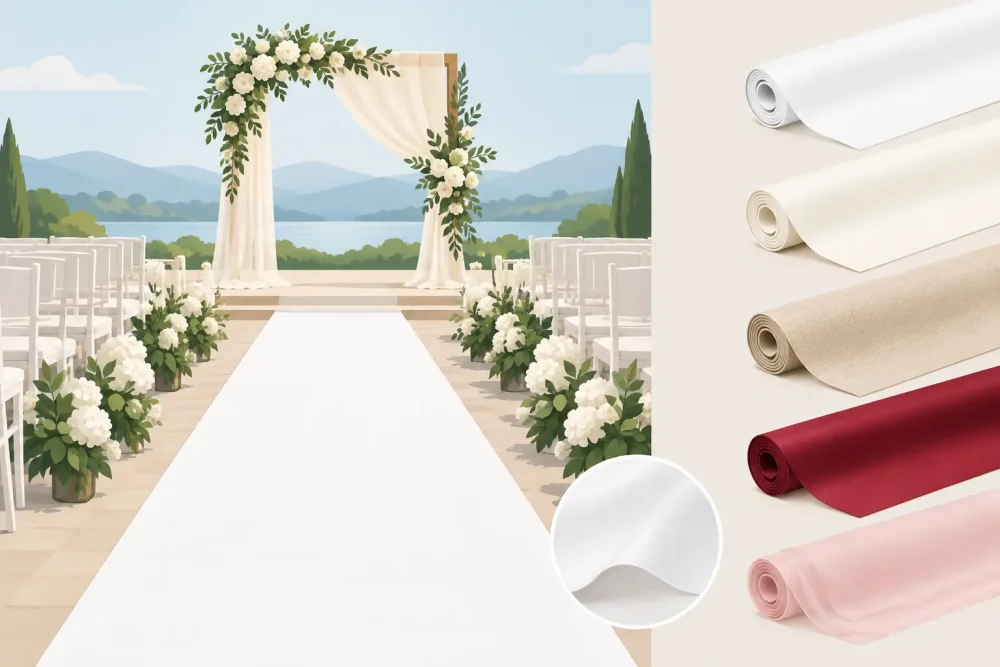
A wedding aisle does more than lead to the altar. It frames the ceremony in photographs, defines the guest experience, and gives every entrance a finished, intentional look. The best wedding aisle runner materials depend on where you are marrying, what guests will walk on, how much weather is involved, and whether the runner needs to make a quiet romantic statement or a high-impact design statement.
A white runner may be the traditional choice, but material selection should come before color. A runner that looks beautiful in a showroom can wrinkle in humidity, shift on polished floors, or become difficult to walk on in heels. The right material creates a polished aisle while standing up to the real conditions of the day.
How to Choose the Best Wedding Aisle Runner Materials
Start with the ceremony surface. A runner placed over grass, sand, gravel, concrete, hardwood, or existing venue carpet will behave differently. Consider the walk itself, too. A short indoor aisle with a flower child has different demands than a long outdoor processional with a wedding party, photographers, and guests crossing nearby.
The most practical choice usually comes down to five details: the look you want, the level of foot traffic, the chance of moisture, the need for secure installation, and whether the runner is being used for one ceremony or throughout the event. A material should photograph beautifully, but it also needs enough weight, texture, and stability to support confident steps.
Carpet aisle runners
Carpet is one of the most versatile options for wedding ceremonies because it offers visual richness and dependable underfoot comfort. Event-grade carpet runners are available in a broad range of colors, from classic ivory and white to black, blush, deep navy, and bold custom shades. They can create a formal chapel effect, a dramatic red-carpet arrival, or a color-coordinated ceremony path that matches the rest of the décor.
For indoor venues, carpet is especially effective over concrete, tile, wood, or ballroom flooring. It softens the space and helps define an aisle in large rooms where the ceremony area might otherwise feel disconnected. Carpet also works well for outdoor ceremonies when the ground is reasonably level and dry.
The trade-off is moisture. Standard carpet can absorb water and may show marks if used on wet grass or in rain-prone conditions. For an outdoor ceremony, use a runner with enough weight to lay flat and secure the edges properly. Aisle runner tape or other venue-approved securing methods help prevent shifting, curling, and trip hazards.
Turf grass runners
Turf runners bring a fresh, garden-inspired finish to weddings where natural texture is part of the vision. They are a strong option for patios, rooftops, courtyards, pool decks, warehouses, and indoor venues that need the look of a lawn without relying on actual grass. Turf can also cover worn or uneven-looking outdoor surfaces, creating a cleaner ceremony setting for photos.
Unlike delicate fabric runners, quality event turf holds its shape under foot traffic and provides a stable, textured walking surface. It works particularly well for rustic, botanical, vineyard, and modern outdoor weddings. A green aisle can also make white florals, light-colored seating, and neutral wedding attire stand out.
Turf is not the right answer for every wedding. It has a more casual, organic appearance than a formal white carpet or velvet-style aisle. It can also feel visually busy when paired with heavily patterned florals or a venue that already has plenty of green surroundings. In those settings, a solid-color carpet may give the ceremony design more contrast.
Fabric runners
Fabric aisle runners, including polyester and nonwoven styles, are popular for couples who want a lightweight, soft-looking path with printed wording, monograms, or decorative borders. They are often used for intimate indoor weddings, church ceremonies, and highly styled setups where the runner will be visible primarily in photos rather than under heavy traffic.
Their appeal is easy to understand. Fabric can feel romantic and personal, especially when it features the couple’s names, a meaningful phrase, or a custom design. However, lighter fabric can bunch, wrinkle, or blow in the wind. It may also become transparent or muddy when placed directly on damp grass.
For a fabric runner, installation is the deciding factor. Allow time to unroll it carefully, smooth it from end to end, and secure the perimeter without creating visible tape lines. If the ceremony is outdoors, plan for a backup material or a covered location if weather becomes a concern.
Vinyl and printed graphic runners
Vinyl is a practical choice for couples who want a custom graphic, bold pattern, monogram, or branded-style design underfoot. It is durable, easy to clean, and less affected by small spills than absorbent materials. For a modern wedding, a printed vinyl aisle can create a crisp visual moment with geometric patterns, illustrated florals, or a custom welcome message.
This option shines in controlled environments such as tented weddings, indoor venues, and covered outdoor spaces. It is also useful when the runner needs to coordinate with a custom dance floor, step-and-repeat, or other printed event elements.
The important consideration is traction. Smooth vinyl can be slippery when wet, particularly with dress shoes or heels. Choose an appropriate finish, keep the surface dry, and confirm that the runner is secured along the edges and at any seams. Vinyl is best treated as a designed flooring element, not simply a decorative sheet placed on the ground.
Natural-fiber runners: jute, sisal, and burlap
Natural-fiber runners bring texture and warmth to beach weddings, barn celebrations, desert ceremonies, and relaxed outdoor gatherings. Jute and sisal create a refined woven look, while burlap has a more rustic, informal character. These materials pair naturally with wood chairs, dried florals, terracotta, linen, and neutral color palettes.
They do have limitations. Loose fibers can shed, rough textures may catch on delicate shoes, and burlap can look unfinished if the edges are not properly bound. Natural fibers also do not respond well to rain or heavy moisture. They are best reserved for dry conditions and shorter ceremony windows.
If you love the texture but need better performance, place a natural-fiber runner over a stable, dry surface rather than directly on grass or soil. This preserves the relaxed aesthetic without asking the material to solve a ground-coverage problem it was not designed to handle.
Match the Material to Your Ceremony Location
For a ballroom, church, hotel, or private indoor venue, carpet is usually the most forgiving and polished option. It delivers clean lines, photographs well, and can be selected in a color that either blends into the room or creates contrast against existing flooring.
For an outdoor lawn ceremony, carpet and turf are often the strongest performers. Carpet gives a classic wedding finish, while turf adds texture and can visually improve an imperfect lawn. In both cases, avoid placing the runner over soaked ground. If rain is possible, make sure the team has a plan for installation timing and secure storage before the ceremony.
For beach, gravel, or uneven terrain, a runner alone may not provide enough stability. Consider whether a temporary walkway, platform, or firm base is needed first. The aisle runner should enhance the route, not create a difficult walk for the couple, wedding party, or guests with mobility concerns.
Color, Width, and Length Matter as Much as Material
A runner can be the right material and still feel undersized. For many ceremonies, a 3-foot-wide aisle gives a traditional, intimate look, while wider runners create a more luxurious path and provide added room for full gowns, parents walking together, or a larger wedding party. Measure the clear aisle from the start of the processional to the altar area, then add enough length for a clean finish beyond the final standing position.
White and ivory remain timeless, but they are not the only wedding-ready choices. Black creates editorial drama, red delivers classic glamour, and deep colors can anchor outdoor settings that need contrast. A custom color or logo treatment can tie the aisle into invitations, florals, signage, or a reception transformation.
Before choosing a pale runner, think about shoes, soil, and ceremony timing. A bright white aisle on a windy lawn may require more maintenance than a soft neutral, patterned design, or richer carpet color. Beautiful planning includes choosing an option that will still look beautiful after the first few footsteps.
Plan Installation Before the Wedding Day
Even the most impressive runner needs a secure install. Ask the venue what adhesives or securing methods are permitted, especially on hardwood, historic floors, tile, or outdoor pavers. Test tape on a discreet area when possible, and never assume a runner’s own weight will keep it in place.
Schedule installation close enough to the ceremony that the aisle stays clean, but early enough to allow for adjustments. Smooth the runner as it is unrolled, check every edge, and walk the full length in the type of shoes likely to be worn during the processional. This small step can prevent a visible wrinkle, loose corner, or uncomfortable surprise at the most photographed moment of the day.
For unusual dimensions, custom colors, monograms, or a ceremony design that continues into the reception, Event Rugs can help turn the aisle into a coordinated event-flooring feature. Choose the material that fits the setting, secure it with care, and let every step toward the altar make the statement it deserves.