


A guest’s first few steps can set the tone for the entire event. A crisp white aisle runner signals ceremony and romance. A saturated carpet entrance creates red-carpet anticipation. Custom turf can turn a blank outdoor pathway into a branded experience before guests reach the first sign. The strongest event flooring trends are not just about what looks good in photos. They help direct movement, define the space, support the theme, and make every arrival feel intentional.
For planners, couples, venues, and brand teams, flooring has become a design decision worth making early. It affects color palettes, staging, signage, lighting, guest flow, and installation logistics. Here is where event flooring is headed and how to choose a look that works beyond the mood board.
Event Flooring Trends: Design With a Purpose
The biggest shift in event flooring is purposeful design. Instead of treating a runner as a last-minute accessory, planners are using it to create a visual route through the event. An entrance carpet can establish the dress code and energy. An aisle runner can frame the ceremony. A custom logo rug can make a sponsor moment feel more polished than a freestanding banner ever could.
This does not mean every event needs an elaborate floor treatment. A simple runner in the right width, color, and material can do more than a complicated design that does not fit the venue or timeline. The trend is toward flooring that earns its place by solving a practical need while making a statement.
Defined pathways replace scattered decor
Guests should not have to guess where an event begins. One of the most useful current approaches is creating clear paths from parking, drop-off, registration, or the venue entrance to the main experience. Carpet runners, turf runners, and repeated flooring zones give guests an intuitive route to follow.
This is especially effective at large venues, outdoor weddings, convention halls, brand activations, and pop-up experiences. A defined path reduces visual clutter and helps event spaces feel organized even when the footprint is large. For outdoor terrain, the right runner can also provide a more comfortable walking surface than grass, gravel, or uneven ground.
Tonal color stories feel more elevated
Bright red carpets will always have a place at premieres, award events, and high-energy arrivals. But planners are increasingly choosing tonal flooring that blends with the broader environment. Think ivory runners paired with neutral florals, deep forest green for a garden-inspired gala, dusty blue for a coastal ceremony, or charcoal carpet beneath a modern black-and-chrome product launch.
A tonal approach makes the floor feel integrated rather than added on. It also photographs beautifully because the runner supports the subject instead of competing with it. If the event includes bold decor, a quieter flooring color can give the eye a place to rest. If the venue is neutral, a rich carpet color may be the right way to introduce personality.
Color selection still needs to account for lighting. A runner that appears warm beige in daylight can read gray under cool ballroom lighting. Requesting a sample or reviewing colors in the actual event environment can prevent an expensive surprise.
Custom Branding Moves Underfoot
Branding is no longer limited to step-and-repeats, backdrop walls, and printed signage. Custom logo rugs and printed runners are becoming central features at corporate events because they put the brand directly in the guest journey.
At a product launch, a logo runner can lead from check-in to the reveal area. At a trade show, branded flooring can help define a booth within a crowded exhibit hall. For a hospitality installation, a custom rug can reinforce the property identity at an entrance, lounge, or photo moment. The most effective designs use the floor as a natural part of the experience, not as an oversized advertisement.
Keep the message readable from the right angle
Floor graphics require different planning than wall graphics. Guests may first see the design from above, from across the room, or through a camera lens. Logos should have enough contrast with the background, and text should be kept short. A large, centered mark often has more impact than a runner crowded with multiple messages.
Direction matters, too. If guests will approach from one end, orient the logo to face them. If the runner is intended for photography, consider where the photographer and guests will stand. These small production choices determine whether custom flooring looks intentional or gets lost in the traffic pattern.
For custom projects, Pantone matching, unusual dimensions, shaped cutouts, and full-color graphics can create a truly event-specific result. They also require lead time. A concept that needs approval, production, and freight should be finalized well before the event date, particularly for large-scale or international installations.
Texture Is Becoming Part of the Experience
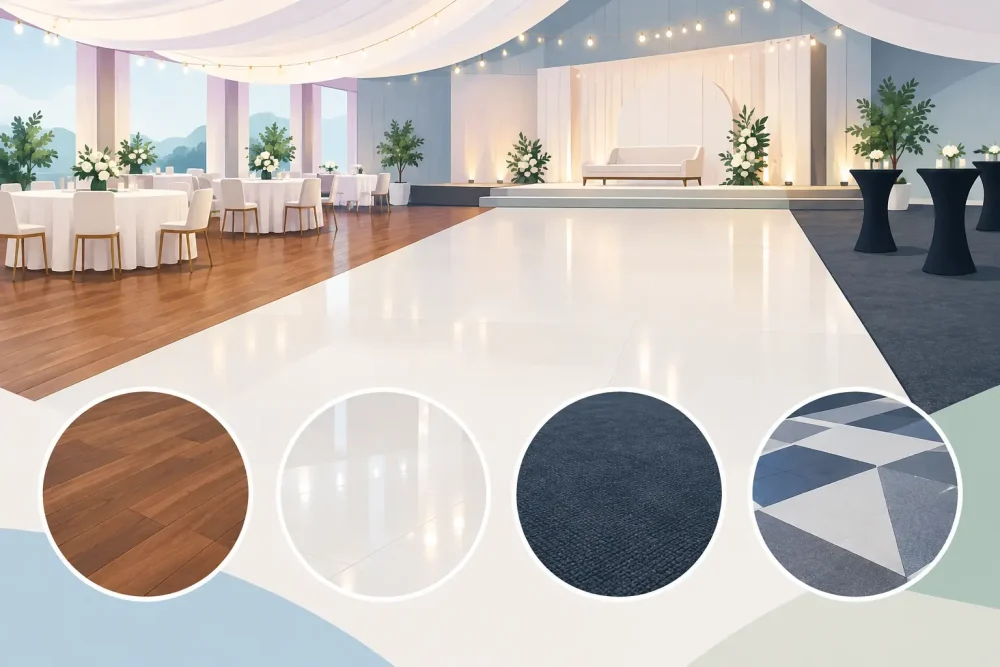
Visual color is only one part of event flooring. Texture influences how a space feels, sounds, and functions. Soft carpet can make a formal room feel warmer and more finished. Turf brings an outdoor, playful, or wellness-oriented look to rooftops, indoor activations, and patio events. A sleek runner can create a clean runway effect for fashion presentations or contemporary receptions.
The right material depends on the setting. Plush-looking carpet may be ideal for an indoor ceremony or VIP arrival, while turf is often a stronger fit for a garden party, sports-themed activation, or outdoor walkway. For high-traffic public events, durability and secure installation should carry as much weight as appearance.
Texture can also define zones without adding walls. A turf lounge beside a carpeted dining area tells guests that the event has different experiences within one larger space. This is particularly valuable in open-plan venues where planners need to separate registration, seating, product displays, and social areas without interrupting sightlines.
Outdoor Flooring Must Be Built for Reality
Outdoor events continue to favor floor treatments because they create comfort and visual order in spaces that may not come with a finished surface. But outdoor flooring has to perform, not simply photograph well.
Before choosing a runner, assess the ground condition, expected weather, foot traffic, and how long the installation will remain in place. A long aisle over grass may need a material that lays flat and a secure installation plan. A windy entrance, damp morning lawn, or gravel walkway can change the appropriate product and tape selection.
Do not assume that more adhesive is always better. The goal is to secure the flooring while respecting the venue surface and allowing for safe removal. Installation tapes should be chosen for the specific substrate, whether that is concrete, carpet, grass, wood, or another event surface. Venue rules may also limit adhesives, stakes, or temporary coverings.
Plan for the transition points
The ends and edges of a runner receive the most attention from shoes, carts, strollers, and rolling equipment. These transition points should be smooth and secure to reduce trip hazards. If the event includes guests using mobility devices, high heels, or carts for catering and production, discuss accessibility and traffic needs before selecting the material and dimensions.
A beautiful runner that is too narrow can create bottlenecks. One that is too wide can overwhelm a compact aisle or leave little room for ceremony chairs. Measure the usable walking area, not just the room dimensions, and account for doors, turns, staging, furniture, and photographer positions.
The Return of the Statement Aisle
Wedding flooring trends are moving beyond traditional white, although white remains a classic for good reason. Couples are using color to make the ceremony aisle part of the overall design story. Black runners can feel editorial and dramatic. Soft blush, sage, terracotta, and muted blue can echo seasonal floral palettes. Deep jewel tones bring a formal, evening-ready look to historic venues and ballroom celebrations.
The statement aisle works best when it supports the couple rather than distracts from them. If the ceremony backdrop, florals, and fashion are already detailed, a solid-color runner may provide the needed visual balance. If the surroundings are minimal, a custom monogram, border, or patterned design can create a memorable focal point.
For a more personal result, some couples are choosing custom aisle runners with names, initials, wedding dates, or meaningful graphics. The trade-off is timing. Custom work gives more creative freedom, but standard ready-to-order runners are often the smarter choice when the event is close or the design is intentionally simple.
Fast Turnaround Still Matters
Event design is rarely linear. Guest counts change, venues shift, sponsors are added, and a weather backup plan suddenly becomes the main plan. That is why speed and availability remain a major part of event flooring trends. Buyers want custom options when the project calls for them, but they also need dependable standard sizes for fast-moving event timelines.
For urgent needs, start with the dimensions, material, color, and installation conditions rather than an abstract look. A runner that can ship quickly and work safely in the space is more valuable than a perfect concept that cannot arrive in time. For larger custom builds, work with a supplier early enough to review artwork, material options, production timing, and delivery requirements. Event Rugs can support both ready-to-order runners and custom flooring projects, helping planners match the right solution to the scale of the event.
The best flooring choice is the one that makes guests feel guided, welcomed, and fully inside the experience from their first step. Choose it with the same care you give lighting, florals, and signage, then make sure the installation plan is ready for real event conditions.