



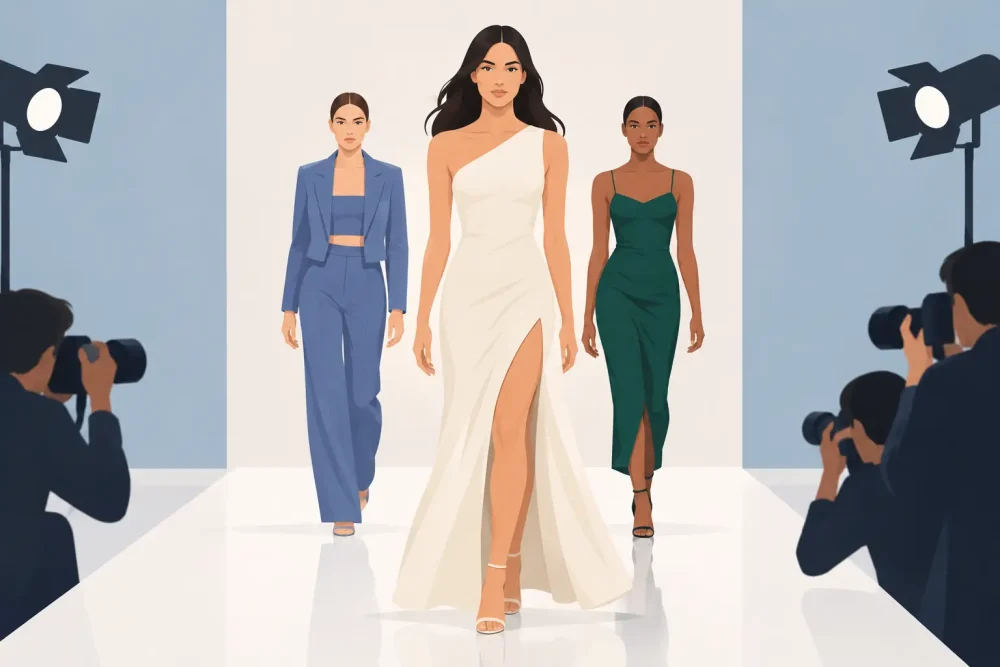
A fashion-show floor is never just a floor. It directs the eye, frames every look, controls where guests and photographers focus, and sets the standard before the first model takes a step. The best runners for fashion shows balance visual drama with practical performance: they must look exceptional on camera, lie flat under pressure, and support a polished guest experience from entrance to finale.
For a small designer presentation, a ready-to-order black, white, or red carpet runner may create exactly the clean runway moment you need. For a brand launch, retail installation, or high-profile production, a custom runner with a logo, graphic pattern, or Pantone-matched color can turn the walkway into part of the campaign. The right choice depends on the venue, show format, lighting plan, foot traffic, and the story the collection is meant to tell.
What Makes a Runner Right for a Fashion Show?
Fashion-show runners need to perform in two ways. They must create an intentional visual surface, and they must stand up to models, production crews, seating changes, cameras, and guest traffic without distracting wrinkles, curls, or shifting edges.
Color is usually the first decision, but it should not be the only one. A high-contrast runner can make garments stand out, while a tone-on-tone runway can deliver a more immersive, editorial effect. Texture also matters. A low-profile carpet surface typically gives models a stable, consistent walking path and looks refined in wide shots. Turf can be highly effective for outdoor, resort, garden, or sport-inspired collections, but it should support the concept rather than compete with the clothing.
The runner also needs to fit the room correctly. An overly narrow runway can feel improvised, while an oversized runner may crowd guest seating or consume valuable backstage space. Measure the full walking route, including the entrance, turns, photo wall approach, and exit. If the show includes a T-shaped or U-shaped runway, custom-cut sections often create a cleaner result than trying to build the layout from multiple standard pieces.
Best Runner Materials for Fashion Shows
Carpet runners for classic runway impact
Carpet runners remain the most versatile option for fashion shows because they offer a finished, event-ready appearance in a broad range of colors. Black carpet creates a modern, gallery-like runway and helps vivid colors, metallics, and white garments pop. White carpet feels crisp, elevated, and editorial, although it requires careful protection from scuffs and backstage traffic. Red carpet delivers instant arrival energy for premieres, VIP seating, designer introductions, and media-facing entrances.
For fashion events, a dark neutral is often the safest choice when the collection includes varied colors and patterns. It creates contrast without casting distracting color onto shoes, hems, or reflective fabrics. Still, a neutral is not always the most memorable option. A saturated pink, cobalt, emerald, or custom color can be the right move when the floor is part of a carefully controlled brand world.
Custom logo rugs for brand-forward presentations
A custom logo rug is especially effective when the fashion show serves a larger marketing purpose. Think retail launches, influencer events, sponsor-led activations, beauty and fashion collaborations, or designer showcases where every photo may circulate beyond the room.
Logo placement should be deliberate. A repeating step-and-repeat pattern may work near the entrance or press line, but it can become visually busy beneath moving models. For the primary runway, a centered logo at the beginning or end of the walk is often more camera-friendly. A tonal logo can add sophistication without pulling attention from the garments, while a high-contrast graphic can make sense for streetwear, athletic apparel, youth-focused campaigns, or bold product launches.
Custom production also gives planners more control over unusual sizes, shaped runways, graphic borders, and exact brand colors. That flexibility matters when a runner needs to align with a stage deck, venue aisle, storefront footprint, or a specific camera angle.
Turf runners for outdoor and themed shows
Turf runners offer a distinct visual experience for outdoor shows and concept-driven installations. They are a natural fit for garden collections, festival fashion, golf or tennis-inspired themes, resortwear, and outdoor brand experiences. Turf can also soften hard concrete, patios, or temporary event grounds while giving the space a more finished look.
The trade-off is texture. Turf is not the best choice for every shoe or silhouette. Very narrow heels, long gowns, and delicate trailing pieces may require more consideration than a collection built around boots, sneakers, or stable footwear. Test the planned shoes on a sample or a small installed section before committing to the full runway design.
Choosing the Best Runner Color Under Event Lighting
Lighting can change a runner more dramatically than many planners expect. A white surface may look bright and clean under soft lighting but become overexposed under intense runway fixtures. Black may feel luxurious and cinematic, yet it can lose edge definition in low light. Rich colors can photograph beautifully, but they may shift under colored LEDs, uplighting, and video production lighting.
Coordinate the runner selection with the lighting designer and photographer early. Ask for a quick camera test if the show involves broadcast coverage, editorial photography, or live social content. This is particularly valuable for glossy fabrics, sequins, reflective shoes, and garments in pale neutrals, which can react strongly to surrounding colors.
For collections with a lot of black, navy, or deep tones, a soft gray, cream, blush, or muted custom color may provide enough separation without making the floor the main attraction. For colorful collections, black, charcoal, or white often gives the styling room to speak. There is no universal best color – the strongest choice is the one that supports the clothing, brand, and camera plan at the same time.
Sizing a Fashion Show Runner for Models and Guests
Most fashion-show layouts need more than one runner. The main runway handles the model walk, while separate runners can define the guest arrival path, press area, VIP entrance, backstage corridor, or retail display zone. Using related colors or coordinated custom graphics helps these spaces feel connected without making the room visually repetitive.
For the runway itself, allow enough width for confident walking, turns, and garment movement. A narrow route can work for an intimate presentation, but it may limit posing and make the room feel crowded. Longer runs need special attention to alignment. A center line that drifts even slightly becomes obvious in wide photography and can make a carefully designed room look off balance.
When working with standard runner sizes, plan around the venue dimensions rather than forcing the venue to fit the product. For large rooms, long corridors, or nontraditional runway shapes, request a custom size. It can reduce visible seams, minimize trimming on site, and create a more precise fit around risers, stage extensions, and seating layouts.
Installation Details That Keep the Runway Camera-Ready
The most beautiful runner can become a liability if it shifts, ripples, or curls at the edges. Installation should be treated as part of the production schedule, not a final decorative task assigned minutes before doors open.
Start with a clean, dry, level surface. Dust, moisture, and uneven flooring can affect how well tape adheres and how smoothly the material lays. Secure the perimeter with event-appropriate carpet tape, then address seams and high-traffic transition points. Avoid placing a visible seam at the end of the runway, where models will stop and photographers will focus.
Give the runner time to relax after unrolling, especially if it has traveled tightly wrapped. Before guest arrival, walk the full route in the actual footwear expected on the runway. Check turns, transitions, hems, heel catches, and any areas where cables or staging meet the floor. If models will enter from a side wing or descend from a platform, test those approaches too.
For outdoor fashion shows, plan for wind, moisture, and surface variation. A runner that works perfectly on a ballroom floor may need extra securing and edge management on grass, pavement, or decking. Build in a contingency plan for weather, including a protected staging area or a replacement runner if the event’s visual standard cannot tolerate a wet or soiled surface.
A Runner Should Support the Collection, Not Steal It
The strongest fashion-show flooring feels intentional from the first invitation image to the final event photo. It may be understated and architectural, or it may be a full-scale branded statement. Either way, it should make models feel confident, guests feel guided, and the collection feel more complete.
Event Rugs can support standard runner needs as well as custom sizes, colors, logos, and event-specific layouts, giving production teams options when the venue or creative direction calls for something beyond an off-the-shelf carpet. Start with the story you want the room to tell, then choose a runner that keeps every step looking planned, stable, and ready for the camera.