



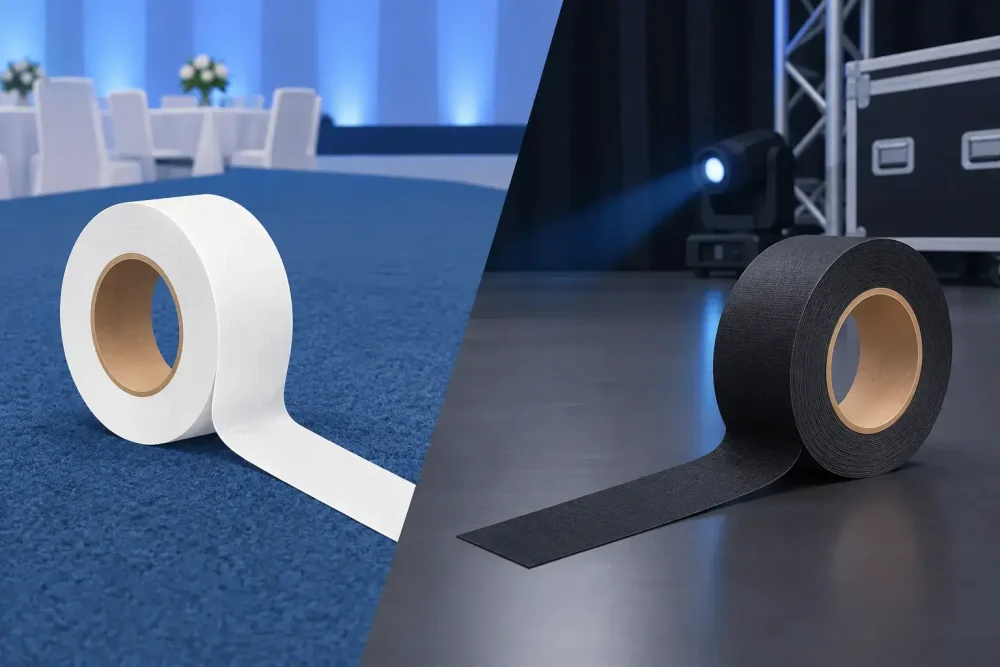
A runner that shifts under a guest’s heel can turn a polished entrance into a preventable problem. When weighing carpet tape versus gaffer tape, the right choice comes down to where the tape will sit, what surface it touches, how long the installation must hold, and how cleanly it needs to come up after the event.
Both tapes belong in an event production kit, but they do very different jobs. Carpet tape is designed to hold flooring in place from underneath. Gaffer tape is a cloth-backed tape made for fast, visible fixes on top of a surface. Treating them as interchangeable can leave you with curled runner edges, visible tape lines, adhesive residue, or a rushed reset when the venue is waiting for the room back.
Carpet Tape Versus Gaffer Tape: The Core Difference
Carpet tape is usually double-sided. One adhesive side bonds to the floor, while the other secures the underside of a carpet, aisle runner, turf runner, or rug. It is the practical choice when the goal is to create a stable walking surface without showing the securing method. Applied around the perimeter and, when needed, across the center of a wide runner, it helps prevent movement and edge lift.
Gaffer tape is generally single-sided, cloth-backed, and designed for temporary production use. Its matte finish is less reflective than duct tape, which makes it useful where tape must remain visible, such as securing a cable run, marking a backstage position, or making a quick repair. It tears easily by hand and conforms well to irregular surfaces.
The simplest way to remember the distinction is this: use carpet tape to anchor the flooring from below; use gaffer tape to manage details from above. A glamorous red carpet entrance, a wedding aisle, and a branded product-launch walkway typically need an invisible hold. That points to carpet tape.
When Carpet Tape Is the Better Choice
For most runner installations, carpet tape is the workhorse. It is especially useful on hard, smooth indoor surfaces such as sealed concrete, tile, vinyl, laminate, and finished wood, provided the venue permits adhesive use and the tape has been tested first.
A double-sided installation keeps the visual focus exactly where it belongs: on the runner color, logo, floral treatment, or guest arrival experience. There are no visible strips crossing the material and no shiny finish catching camera flash. This matters on ceremony aisles, fashion runways, step-and-repeat approaches, award-show entries, and branded spaces where every photograph is part of the event story.
Carpet tape also distributes holding power more effectively for broad flooring. Rather than relying on a narrow strip at an exposed edge, it can create a secure bond across the underside of the material. If a runner will receive steady foot traffic, rolling carts, or guests in heels, that added stability is valuable.
That said, “stronger” is not automatically “better.” High-tack carpet tape may be appropriate for a busy, long-duration installation, but it can be too aggressive for delicate finished floors. Use a removable tape matched to the surface and expected duration whenever possible. A small test in a discreet area should be part of the load-in plan, not an afterthought.
Best uses for carpet tape
Carpet tape is generally the better fit for wedding aisle runners, red carpet arrivals, logo rugs, temporary showroom flooring, and indoor turf installations. It is also a smart option for joining sections of carpet from underneath, where a clean seam matters and the top surface must remain camera-ready.
For large-format installations, do not assume tape alone will solve every condition. A heavy custom rug may need strategic perimeter taping, while a lightweight runner may need additional cross strips to prevent rippling. The material, pile height, backing, floor finish, room temperature, and traffic pattern all affect performance.
When Gaffer Tape Earns Its Place
Gaffer tape is invaluable on event day, just not usually as the primary method for securing a runner. Its fabric backing gives it a flexible, durable feel that works well for short-term production tasks. It is often the faster choice when crews need to secure a cable cover, label equipment, tame a loose corner temporarily, or make a discreet emergency repair backstage.
On some low-pile event carpets, a carefully selected gaffer tape can be used on top to hold a small edge or seam in a pinch. This is more of a contingency than a preferred installation method. The tape will be visible, can collect dust, and may interrupt the finished look. On light-colored runners, the contrast can be especially noticeable in photos.
Gaffer tape also comes in many grades. Some are formulated for cleaner removal than others, but no tape is guaranteed residue-free on every surface. Heat, sunlight, moisture, floor coatings, and long application times can change the result. The label may call a tape removable, yet the venue’s newly refinished hardwood may still require a more cautious approach.
For outdoor events, gaffer tape can help with quick production fixes, but wind, wet ground, textured pavers, and temperature swings make adhesion unpredictable. A runner placed on grass, gravel, uneven stone, or damp pavement needs a site-specific plan. In some cases, mechanical anchoring, a heavier flooring product, or a protected installation area will be more reliable than adding more tape.
Choose Tape Based on the Surface, Not Just the Event
The most beautiful runner is only as dependable as the surface beneath it. Before selecting tape, ask the venue what the floor is made of, whether it has been sealed or recently refinished, and what adhesive products are prohibited. Many venues have specific rules for historic floors, polished stone, sports courts, painted concrete, and luxury vinyl.
On smooth sealed floors, a removable carpet tape can often deliver a clean, stable installation. On rough concrete or textured surfaces, tape has less continuous contact area, so bond strength may be reduced. On carpeted venue floors, double-sided carpet tape can sometimes grab the existing pile instead of creating a stable base, making careful testing essential.
Avoid applying adhesive to wet, dusty, oily, or cold surfaces. Sweep and dry the area first. If the flooring must cross a threshold, doorway, or transition between materials, pay special attention to that point. Those are the areas most likely to catch shoes, carts, and equipment wheels.
A Better Installation Method for Event Runners
Tape works best when it supports thoughtful installation rather than compensating for a rushed one. Measure the placement area before unrolling the runner, allowing for doors, furniture movement, staging, and guest circulation. Dry-fit the material so it lies flat and aligns with the intended visual axis.
For a standard aisle runner, begin with removable carpet tape along the perimeter, keeping the tape slightly inside the edge so it does not extend beyond the material. Add cross strips underneath where foot traffic will be concentrated or where a lightweight runner needs more support. Press firmly as you work, rather than pulling the material tight from one end, which can create ripples.
If a seam needs attention during the event, gaffer tape can be a useful backup. Choose a color that blends with the flooring, use the smallest effective piece, and place it only after confirming that the top surface is clean and dry. Replace a quick patch with a proper underneath repair when the schedule allows.
Safety and Removal Deserve Equal Planning
Guest safety is part of the design. Walk the full length of the installed runner before doors open, checking for lifted corners, ripples, bubbles, and loose transitions. Repeat the check after heavy deliveries, weather changes, or a large guest arrival. A runner that looked perfect at setup can shift once it meets hundreds of footsteps.
At strike, remove tape slowly and at a low angle, pulling it back over itself instead of straight up. This reduces stress on the venue surface and can limit residue. Do not leave tape down longer than necessary, particularly in warm spaces or direct sunlight. If adhesive remains, follow the venue’s approved cleaning process rather than experimenting with harsh solvents on an unfamiliar floor.
For a high-visibility installation, it is worth ordering enough tape to test, install, and keep a reserve roll on site. Event Rugs can help match runners and installation supplies to the demands of your venue, timeline, and design direction.
The best tape is the one guests never notice: it keeps every edge flat, protects the venue floor, and lets the walkway make the statement it was designed to make.