



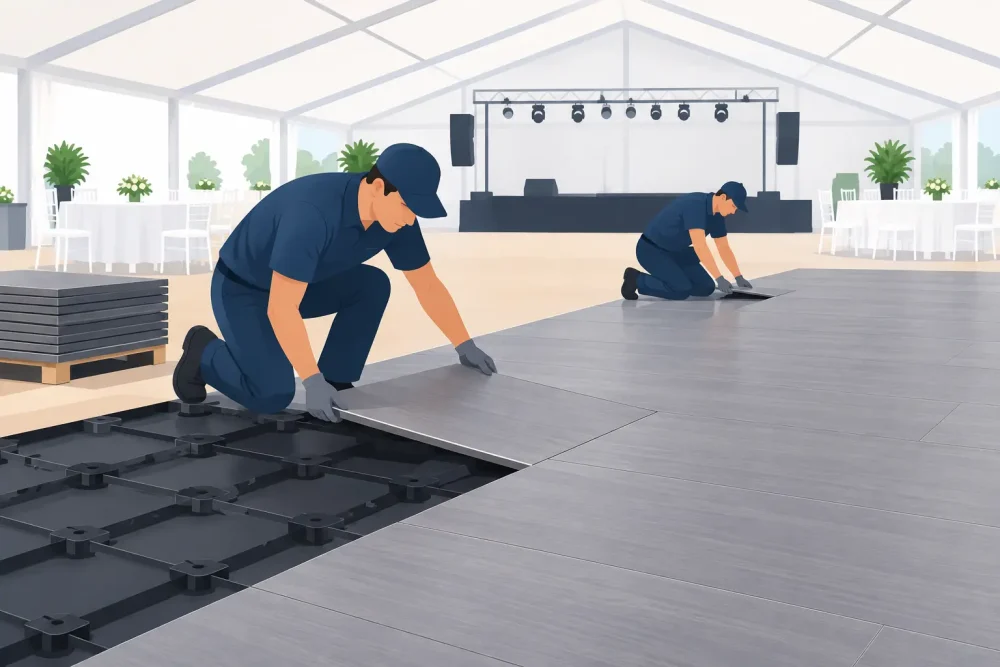
A runner can look camera-ready when it arrives and still become an event-day problem if the surface beneath it has not been considered. This temporary flooring installation guide is built for the details that protect the finished look: the venue floor, foot traffic, weather, tape selection, transitions, and the moment guests begin walking across it.
Whether you are creating a white wedding aisle, a branded product-launch entry, a fashion runway, or a turf-covered outdoor walkway, temporary flooring has two jobs. It needs to make a visual statement, and it needs to stay put. The right material and installation plan deliver both.
Start With the Event Surface, Not the Runner
Before choosing a color, width, or custom graphic, identify exactly where the flooring will sit. A runner installed over smooth, sealed concrete behaves very differently from one placed over textured pavers, plush hotel carpet, grass, sand, or a hardwood floor with a delicate finish.
Indoor venues generally provide the most predictable conditions. Clean, dry concrete, tile, vinyl, and low-pile commercial carpet can work well with appropriate installation tape. But a glossy surface may show tape residue if the wrong adhesive is used, while heavily textured flooring can reduce contact and cause edges to lift.
Outdoor installations require a more conservative plan. Wind, moisture, uneven ground, temperature shifts, and guest traffic can all affect performance. A carpet or turf runner may need additional perimeter securement, a protected transition at each end, or a rigid underlayment beneath it. If rain is possible, plan for drainage and avoid treating any wet surface as tape-ready.
Ask the venue three practical questions before ordering: What is the floor made of? Are adhesives permitted? Who is responsible for restoring the surface after the event? Those answers can determine the material, tape type, and installation method long before load-in.
Choose Flooring for the Job It Needs to Do
Temporary flooring should fit the environment, not just the mood board. A narrow aisle runner can define a ceremony path beautifully, while a broader carpet installation creates a true arrival experience for a gala, premiere, or corporate activation. For large branded areas, custom-cut carpet or logo rugs can make the space feel intentional from the first photo to the final guest exit.
For a clean, formal look, event carpet runners are a dependable choice. They photograph well, come in colors suited to weddings and red-carpet moments, and can be cut to fit a specific length. Turf runners bring a fresh, outdoor-inspired texture to patios, garden parties, sports-themed events, and experiential activations. They can also help visually soften concrete or parking-lot surfaces.
Material selection also depends on duration. A runner for a 30-minute ceremony faces less wear than flooring for a two-day trade show with rolling equipment, queues, and repeated cleaning. For longer installations, consider pile height, backing strength, stain visibility, and whether the flooring will need to be repositioned or replaced during the event.
Color deserves a practical review, too. White and ivory create a striking aisle but reveal dirt quickly outdoors. Black feels polished and forgiving at high-traffic entries. Bold colors and custom Pantone-matched flooring strengthen branding, but lighting can alter how those colors read in photos and video. Requesting a sample or testing a small section under event lighting can prevent expensive surprises.
Temporary Flooring Installation Guide: Plan Measurements Carefully
Measure the full route, then add enough material for clean starts, finishes, and trimming. Do not measure only the visible aisle or walkway. Include the point where the runner begins behind a ceremony backdrop, the extra length needed at a doorway, and any overlap required at a stage or step.
Width is just as important as length. A 3-foot runner may suit a simple ceremony aisle, but it can feel tight for a processional with flowing dresses or for guests using mobility devices. A wider runner creates more visual presence and allows two people to walk side by side. For entrance carpets, consider queue movement, stanchion placement, photographers, and any step-and-repeat backdrop that will frame the space.
For irregular footprints, make a simple sketch with dimensions. Note columns, corners, door swings, floor vents, ramps, stairs, and utility covers. Custom shapes, curves, cutouts, and logo placement should be planned from this drawing rather than estimated on-site. The more exact the plan, the cleaner the final installation will look.
Always confirm delivery timing against your load-in window. Give the crew enough time to inspect the flooring, acclimate it if needed, install it without rushing, and correct any issues before the first guest arrives.
Prepare the Surface Before Tape Touches the Floor
A beautiful runner cannot compensate for debris underneath it. Sweep or vacuum the installation area thoroughly, then remove dust, moisture, oil, leaves, and loose grit. Even a small pebble can telegraph through thinner materials and become a visible bump in photography.
Allow wet surfaces to dry completely. Tape applied to damp concrete, damp turf, or a recently mopped ballroom floor is unlikely to hold as intended. If the event is outdoors, check the ground again immediately before installation. Morning dew and late-afternoon weather changes matter.
Next, unroll the flooring and let it relax. Material shipped tightly rolled may retain curl at the edges. Lay it flat in the intended position, align it with the event layout, and allow the crew to inspect for ripples, wrinkles, or damage. Avoid pulling a runner aggressively to make it lie flat. Tension can create distortion and encourage the material to shift later.
If the flooring must be trimmed, mark the backing side whenever possible and use a sharp utility blade with a straightedge. Make controlled cuts away from finished venue surfaces. For a custom logo rug or printed piece, confirm orientation before any trimming begins. A centered logo at the wrong end of the entrance is a preventable mistake.
Secure Edges, Seams, and Transitions
Most temporary event flooring is secured from the perimeter, with additional tape where seams or high-traffic points need reinforcement. The correct tape depends on the flooring backing and the venue surface. Double-sided carpet tape may work well in approved indoor applications, while other locations may call for lower-tack, surface-safe options or mechanical solutions specified by the venue.
Test tape in a hidden area whenever the floor finish is valuable, unfamiliar, or subject to strict venue rules. Press it down firmly and check removal guidance before committing to the entire installation. A tape that holds perfectly can still be the wrong choice if it risks damaging hardwood, stone, painted surfaces, or specialty flooring.
Keep tape close to edges without allowing it to extend beyond the runner. For a long aisle or broad carpet, secure corners first, then work down each side while maintaining alignment. If two pieces meet, create a tight, straight seam. Avoid overlapping thick materials where guests may catch a heel or where rolling cases must pass.
Transitions deserve extra attention. At doorways, changes in floor height, ramps, and the beginning or end of a runner, check for curled edges. If the event calls for a substantial material or a raised platform, use appropriate edging or ramp solutions rather than hoping tape alone will solve a height difference.
Build Safety Checks Into the Run of Show
Once installed, walk the entire route in the same direction guests will travel. Then walk it again in heels, dress shoes, or the footwear most relevant to the event. Look for lifted corners, loose seams, slippery sections, bunching, and places where the path narrows around furniture or décor.
For a public-facing event, assign someone to inspect the flooring during guest arrival and after any schedule change. A runner may need quick attention after a rain shower, a delivery cart crossing the entry, or a packed cocktail hour. Keep spare tape, a utility knife, cleaning cloths, and a small repair kit accessible to the floor manager.
Do not block exits, accessibility routes, or required fire lanes. Temporary flooring should guide movement, not create obstacles. If the venue has safety requirements for flame resistance, tape, or egress, get those details in writing before production day.
Removal Should Be Planned Before Installation
Removal is easier when the installation crew understands the floor underneath and the tape used. Pull tape back slowly and low to the surface rather than lifting straight up. This reduces the chance of leaving residue or pulling at a delicate finish. Roll up carpet or turf as it is removed to keep debris contained and make disposal or reuse more manageable.
For custom projects, a pre-event installation plan can turn a complicated footprint into a polished, reliable guest experience. Event Rugs can help coordinate custom dimensions, colors, logos, and practical securing supplies so every step looks intentional from curbside arrival to the final photo.