



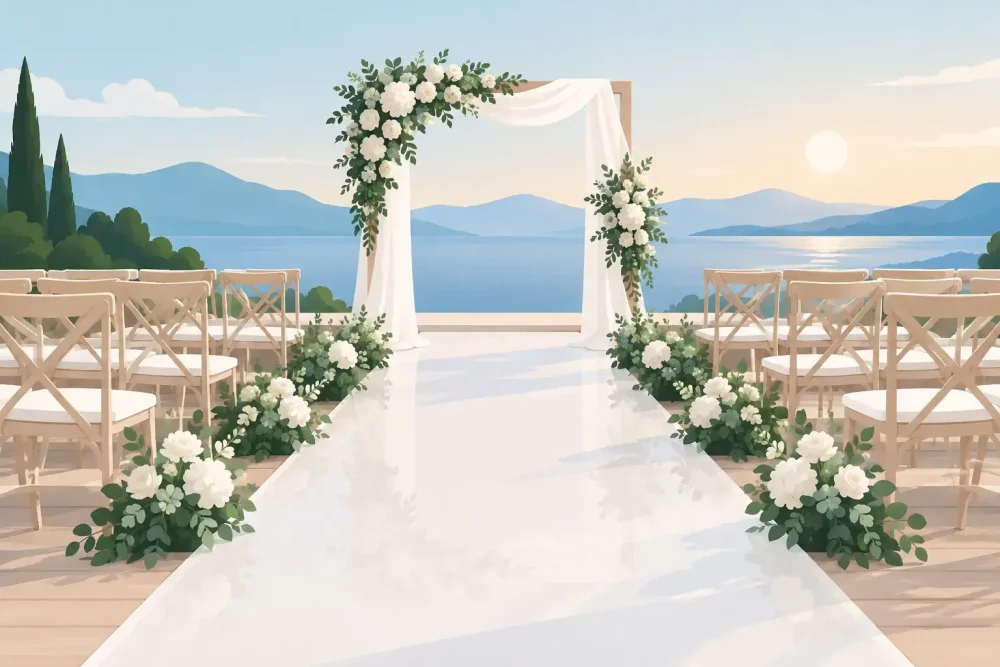
The walk down the aisle lasts only minutes, but it appears in nearly every ceremony photo. Ceremony flooring gives that moment a defined path, a stronger visual frame, and a more comfortable surface for the people making it happen. Whether you are planning a garden wedding, a corporate awards presentation, or a fashion-forward brand event, the right runner or carpet turns open space into an intentional arrival experience.
The best choice is not always the most elaborate one. It is the flooring that fits the venue, supports the event schedule, photographs in the right color, and stays secure from the first guest arrival through the final exit.
Start With the Ceremony Space
Before choosing a color or material, look at what is underfoot. Indoor ballrooms, grassy lawns, concrete terraces, sandy beaches, and temporary event decks each create different needs. A plush carpet can add a formal, high-end finish to a hotel ballroom, while a durable outdoor runner may be the better answer for a ceremony held on grass or pavement.
Measure the full route, not just the aisle. Include the distance from the entrance to the ceremony focal point, plus any transition areas where guests, the wedding party, speakers, or honorees will step on and off the flooring. If chairs line both sides, leave enough walking room for the processional without crowding chair legs.
Width changes the entire look. A narrow runner creates a classic, intimate aisle and can work beautifully in smaller rooms. A wider carpet feels more cinematic, gives formalwear more room, and makes a stronger statement in large venues. For stages, runways, and corporate presentations, wider flooring also helps define where the audience should direct its attention.
Choose Ceremony Flooring for the Conditions
A beautiful surface still needs to perform. Consider venue rules, foot traffic, weather exposure, and how much time the installation team has before doors open.
For indoor events, carpet runners are often selected for their color range and polished appearance. They can soften hard flooring, reduce visual distractions, and coordinate with draping, florals, linens, and lighting. White, ivory, black, red, and neutral tones remain popular because they are easy to style, but a bold color can set the tone for a launch, gala, or themed celebration.
Outdoor ceremony flooring needs a more practical conversation. Grass can be uneven, damp, or soft after rain. Concrete can be hot, slippery, or visually industrial. Turf grass runners can create a fresh, garden-ready path in places where natural lawn is unavailable or inconsistent. Durable event carpet can add color and coverage over hard surfaces, provided it is properly secured.
Beach ceremonies require especially careful planning. A runner may help create a visual aisle, but sand movement, wind, and heel stability should guide the decision. In some cases, a shorter ceremony path, flatter footwear, or a more natural aisle treatment is smarter than forcing a long carpet installation. Good event design accounts for the setting instead of fighting it.
Color Should Work on Camera and in Person
Color is one of the fastest ways to make a ceremony feel custom. It also affects photography more than many planners expect. A white aisle runner can look clean and romantic, but it may show dirt, grass marks, and shoe traffic quickly outdoors. Deep colors can create dramatic contrast, though very dark flooring may absorb detail in low light.
Think about the complete visual field: ceremony backdrop, chairs, florals, attire, lighting, and the venue floor. A runner should create contrast without competing with the people at the center of the event. For example, a champagne or ivory carpet can bring warmth to a neutral wedding palette, while a black runner with a crisp logo can give a corporate awards entrance a red-carpet level of polish.
For branded ceremonies and activations, custom flooring provides more control. Pantone-matched colors, printed graphics, sponsor marks, monograms, and directional messaging can turn a simple walkway into a brand asset. This works particularly well when guests will be photographed entering, when press coverage is expected, or when the ceremony space needs to reinforce a campaign identity.
Build Safety Into the Design
The most successful ceremony flooring is rarely noticed as a safety feature because it simply stays in place and feels stable. That depends on matching the securing method to the surface and conditions.
Installation tape is essential for many carpet and runner applications, especially where edges could lift under foot traffic. Secure the perimeter, pay attention to seams, and avoid creating curled corners where heels, dress trains, mobility devices, or production equipment could catch. On uneven ground, test the surface before guests arrive rather than assuming a runner will lie flat on its own.
Ask the venue what is permitted. Some facilities have rules about adhesive products, flame ratings, load-in windows, or covering existing floors. Historic properties, hotel ballrooms, and public venues may require specific floor-protection methods. A fast answer on product selection is valuable, but a quick site check can prevent an expensive last-minute adjustment.
Also consider the people using the aisle. A wedding party in formal shoes has different needs than a speaker using a wheelchair, a group of children, or a high-traffic guest entrance. If the flooring will be used by a broad range of guests, prioritize a stable, accessible path over a design detail that creates unnecessary risk.
Plan for the Full Event Timeline
Ceremony flooring is often installed early, then exposed to deliveries, floral setup, lighting adjustments, and guest traffic before the ceremony begins. That makes timing part of the product decision.
If the aisle is installed before other vendors finish, protect it where possible. Keep ladders, carts, food service equipment, and floral buckets off the visible surface. If the event has a tight load-in, choose a runner size and installation approach that can be deployed quickly. Standard sizes may be the most efficient solution when the space is straightforward and the timeline is compressed.
Custom flooring is worth considering when the venue has unusual dimensions, the aisle needs a special shape, or the design calls for a monogram, logo, cutout, or exact color match. It requires more lead time and more precise measurements, but it can eliminate the awkward gaps and improvised trimming that make an otherwise polished event look unfinished.
For eligible standard products, quick shipping can be a major advantage when plans change close to the event date. Still, do not leave flooring until the final detail. Confirm dimensions, venue access, installation responsibilities, and delivery timing before the event week begins.
When a Standard Runner Is Enough
Not every ceremony requires a custom-built installation. A ready-to-order aisle runner is often the right fit for a traditional wedding aisle, a small indoor gathering, or a straightforward entrance where speed and budget matter most. The key is choosing a size that suits the space instead of trying to stretch one product across a layout it was not designed to cover.
Custom options make more sense when flooring is a central feature of the event. Think of a large corporate stage reveal, a branded runway, a red-carpet arrival, or a ceremony where the aisle design is part of the creative direction. In those settings, the floor is not merely functional. It is part of the set.
Event Rugs supports both approaches, from standard runners for fast, practical coverage to custom rugs and carpets designed around the exact space, color, and graphic requirements of an event.
A Final Check Before Guests Arrive
Walk the completed ceremony path from both directions. Look for wrinkles, loose edges, visible tape, uneven seams, and color shifts caused by lighting. Then stand where the photographer or audience will stand. That perspective often reveals whether the flooring frames the moment as intended.
The right ceremony flooring does more than cover the ground. It gives every entrance a sense of purpose, supports every step with confidence, and helps the most meaningful moment of the event look ready for the camera.