



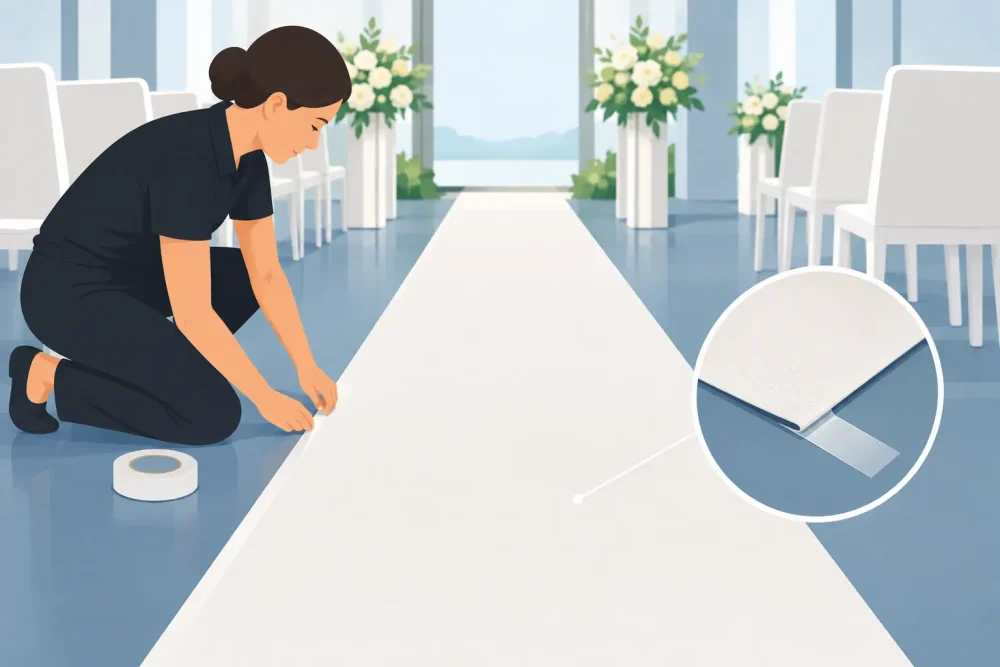
A beautiful aisle runner should draw eyes toward the ceremony, not pull attention to a lifted corner or a guest trying to regain their balance. Knowing how to secure aisle runners is one of those behind-the-scenes event details that protects the guest experience, keeps photos polished, and lets every entrance feel intentional.
The right approach depends on the runner material, the floor below it, weather conditions, and how much foot traffic the aisle will receive. A lightweight runner on smooth ballroom tile calls for a different installation than turf on a lawn, a branded carpet at a product launch, or a red-carpet arrival line outside a venue. The goal is the same in every setting: a flat, stable surface with clean edges from the first guest arrival through the final exit.
Start With the Surface, Not the Tape
Before choosing an installation tape, inspect the surface where the runner will sit. It should be clean, dry, and as level as possible. Dust, moisture, wax, loose gravel, and textured flooring can all reduce adhesion, even when using a high-quality double-sided tape.
Hard, nonporous surfaces such as sealed concrete, tile, vinyl, and finished wood are usually the simplest places to secure an aisle runner. They allow tape to make broad, consistent contact with the floor. However, some venues restrict adhesive use on delicate wood, specialty flooring, painted surfaces, or historic materials. Get approval before installation, especially at museums, hotels, houses of worship, and private estates.
Existing carpet requires a different mindset. Tape may not hold reliably to plush pile, and aggressive adhesives can pull fibers when removed. For a short ceremony aisle, a runner may stay in place with carefully positioned carpet-safe tape and the natural grip of the backing. For longer aisles or high-traffic events, test a small hidden section before committing to the full installation.
Outdoor surfaces add more variables. Concrete patios, pavers, decking, and asphalt can work well when dry, but wind, humidity, and uneven joints need extra attention. Natural grass is the least predictable surface because it is soft, uneven, and often damp underneath. A turf runner or heavier event carpet is generally more stable outdoors than thin paper-like material, but every edge still needs a plan.
How to Secure Aisle Runners Step by Step
Prepare the installation area
Sweep or vacuum the path before unrolling the runner. On hard floors, wipe away dust or residue and allow the surface to dry completely. Outdoors, remove leaves, pebbles, twigs, and any debris that could create a bump beneath the runner.
Measure the aisle one more time before you begin. Confirm where the runner will start and end, where chairs will be placed, and whether floral installations, arches, stages, or cable ramps will affect the path. A runner should extend far enough to frame the ceremony without creating extra loose material at either end.
Let the runner relax flat
Unroll the aisle runner in its final position and give it time to settle. A runner that has been tightly rolled during shipping may retain a slight curl, especially at the leading edge. If possible, unroll it 30 to 60 minutes before installation in a clean, protected area.
Keep the pile, texture, or printed design facing the correct direction before applying tape. Once an adhesive is down, repositioning can become difficult and may damage the runner or leave residue on the floor. For high-visibility moments such as weddings, fashion shows, and awards events, check the runner from the guest-facing direction as well as from the ceremony focal point.
Apply tape around the perimeter
For most indoor aisle runners, secure the perimeter first. Run double-sided installation tape along both long edges, then reinforce the beginning and end of the runner. Remove the release liner gradually as you press the runner into place, working in short sections rather than exposing all adhesive at once.
Avoid stretching the runner while you apply tape. Pulling it taut can make it look smooth initially, but temperature changes, foot traffic, or a slight shift in the floor can create ripples later. Press it flat using clean hands or a soft roller, moving outward from the center to reduce trapped air.
For a standard ceremony runner, perimeter tape is often enough. If the aisle is especially long, exposed to wind, or likely to receive heavy traffic, add a few narrow strips of tape across the width at intervals. Do not create thick overlapping layers of tape that can telegraph through a thin runner or cause uneven footing.
Reinforce corners, seams, and transitions
Corners are the first areas to lift, particularly where guests turn into or out of the aisle. Add extra tape beneath each corner and press firmly. If two runner sections meet, align their edges closely and use tape beneath both pieces so the seam stays flat.
Pay close attention where the runner meets another floor surface, such as a stage, dance floor, doorway, or sidewalk. A raised transition can catch a heel or shoe sole. Whenever possible, position the runner so it ends flush on a level surface. If a transition cannot be avoided, use a suitable low-profile edge treatment approved for the venue and event conditions.
Perform a real walk test
Do not treat installation as complete until someone walks the full length of the aisle. Have a team member test it in both flat shoes and heels if heels are expected at the event. Check for shifting, bubbles, curled edges, soft spots, and tape that is visible through the material.
Walk it again after chairs, floral décor, stanchions, or lighting are installed. Nearby setup activity can tug at an edge or introduce debris under the runner. A final inspection shortly before guests arrive is a small task that can prevent a very public problem.
Adjust the Method for Outdoor Events
Outdoor installations should be completed as close to event time as practical. Morning dew, unexpected rain, direct sun, and gusting wind can change conditions quickly. Even a well-secured runner may need a final edge check after the weather shifts.
On patios and other smooth exterior surfaces, use an event installation tape designed for the conditions and follow the manufacturer’s surface recommendations. Keep water away from the taped area until the event begins. If the surface is wet, allow it to dry before installation rather than hoping the adhesive will hold through moisture.
On grass, focus on choosing a runner with enough body and weight for the setting. Thin materials can follow every dip in the lawn, making secure edges more difficult. Professional installations may use discreet ground-safe fasteners at the perimeter when permitted, but this requires venue approval and care around irrigation lines, electrical runs, and underground utilities. Never leave exposed fasteners where guests can step on them.
Wind deserves its own contingency plan. A few loose petals may look romantic; a lifting runner does not. Reinforce the leading edge and corners, and assign one person to monitor the aisle before the ceremony begins. If wind conditions become severe, a heavier runner or an adjusted ceremony layout may be the safer decision.
Choose Tape With Removal in Mind
The strongest adhesive is not always the best choice. A formal venue may require a low-residue tape that protects finished flooring, while a large outdoor activation may need a more aggressive option for a heavier carpet. Balance holding power with the surface’s value, finish, and removal rules.
Before installation, test tape in an inconspicuous area whenever possible. Press it down, leave it briefly, then remove it slowly to see whether it leaves residue or affects the finish. This quick test is especially valuable on wood, painted concrete, vinyl, and rented flooring.
At teardown, pull tape back slowly and low against the floor rather than straight upward. This reduces the chance of pulling at the surface or leaving adhesive behind. Keep cleaning supplies appropriate for the venue material on hand, but do not use a solvent without confirming that it is safe for that floor.
Plan for Traffic, Not Just the Ceremony
Aisle runners often see more use than planners expect. The wedding party rehearses. Photographers move into position. Guests cross the aisle before taking their seats. Brand ambassadors, production crews, and venue staff may use the same path throughout an activation.
For events with significant traffic, install the runner after major load-in whenever possible. Protect it during final setup, and avoid placing rolling carts, ladders, or heavy décor directly on top of it. If the aisle must remain in place for hours, schedule periodic edge checks rather than assuming the first installation will hold unchanged.
For custom dimensions, unusual shapes, logo rugs, or long-format event carpets, build installation planning into the production conversation early. Event Rugs can help event teams match the runner style and securing supplies to the setting, whether the finished look calls for a classic ceremony aisle, a high-impact branded walkway, or an entrance fit for the stars.
A securely installed aisle runner should feel almost invisible underfoot. When guests can walk confidently, cameras capture clean lines, and the design stays exactly where it belongs, every step has the space to make a statement.